
Vaccinations for Bali from Australia: What Travellers Should Consider in 2026
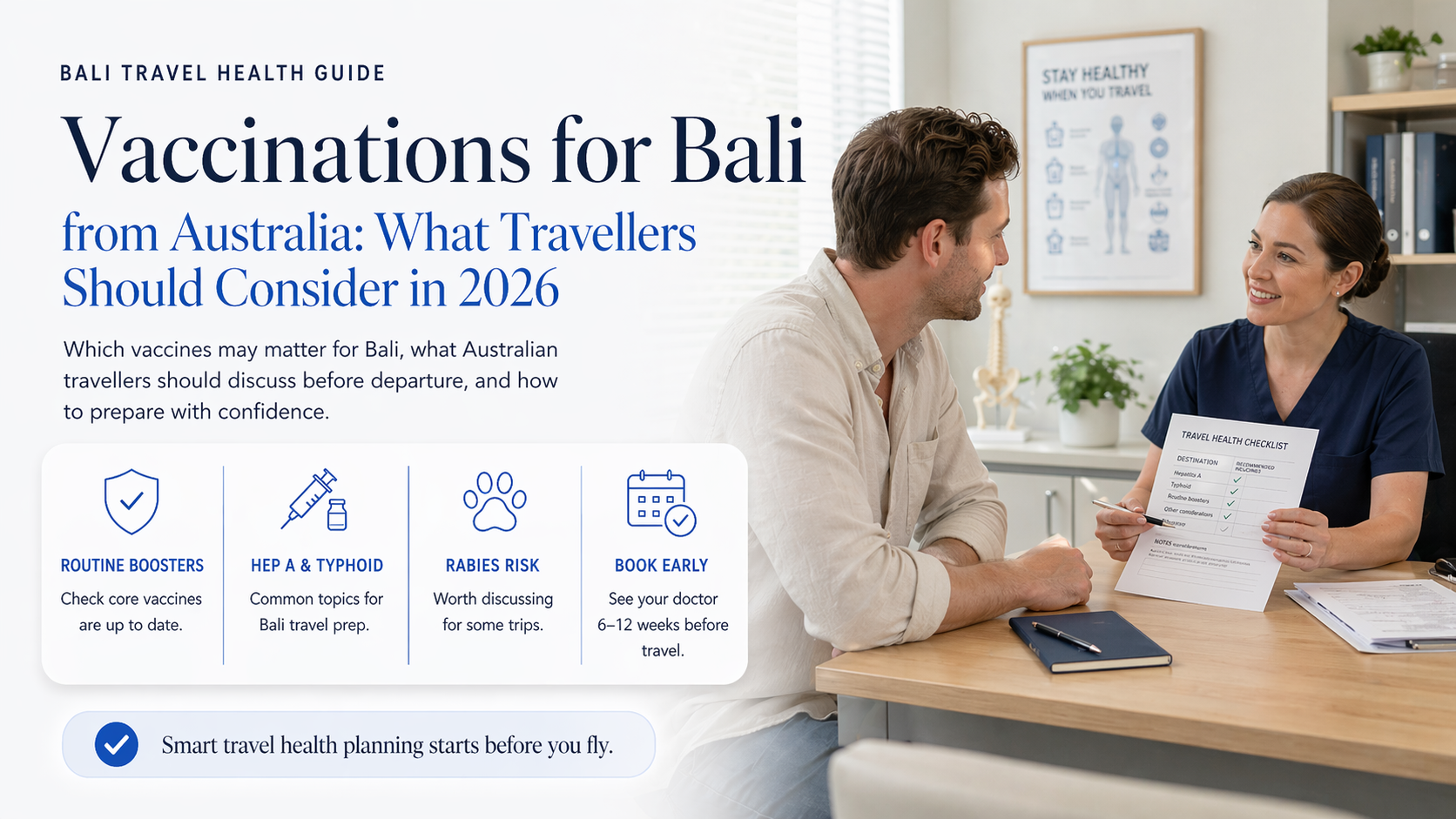
Planning a Bali trip from Australia? Vaccines are one of the most important parts of pre-travel preparation, but they are also one of the most confusing. Many travellers want a simple yes-or-no answer, but the reality is that there is no single vaccine checklist that suits every Bali holiday. The right advice depends on your routine immunisation status, how long you are staying, whether you are sticking to resort areas, whether you will be around animals, and what type of travel you are doing. The Australian Government advises travellers to speak to a doctor or travel health clinic 6 to 12 weeks before departure so there is enough time for immunity to develop and, where needed, for multi-dose vaccines to be completed.
For Bali Belly Doctor, this is an excellent topic because it sits right at the intersection of Bali travel health, Australian traveller intent, and practical medical guidance. It also supports related topics like dengue, food poisoning, dehydration, travel insurance, and doctor house calls in Bali. Smartraveller also advises Australians heading to Indonesia to ask their doctor about health risks and vaccines before they go, and notes that dengue occurs throughout Indonesia, including Bali, while periodic measles outbreaks continue to be reported, including in Bali.
Do you need vaccines for Bali?
For many Australian travellers, the most important starting point is not a special “Bali vaccine” at all. It is making sure your routine vaccinations and boosters are up to date. The Australian Government says travel is a good time to check that you and your children are current with routine immunisations, including MMR, diphtheria-tetanus-whooping cough, polio, chickenpox and influenza, and notes that some adults may need boosters because immunity can fade over time.
That matters for Bali more than many people realise. The CDC also recommends that travellers be up to date with routine vaccines before every international trip, and Smartraveller’s Indonesia advice specifically notes measles outbreaks in Bali. In practical terms, many travellers who think they are asking about exotic travel vaccines may actually need to start by checking their standard Australian immunisation record.
The most important vaccines Australian travellers should discuss before Bali
Routine vaccines and boosters
Before getting into destination-specific vaccines, check the basics. Routine vaccines are often the foundation of safe travel, especially for families travelling with kids or adults who have not reviewed their vaccination history in years. The Australian Government says this should include checking routine childhood and adult vaccines, while the CDC’s Indonesia guidance reinforces that routine protection should be current before travel.
Hepatitis A
Hepatitis A is one of the most important vaccines to discuss before Bali. The Australian Immunisation Handbook says Hepatitis A vaccine is recommended for all travellers aged 1 year and over travelling to moderately or highly endemic countries, including developing countries. That makes it highly relevant for Bali and Indonesia travel planning.
This is one of the clearest, most useful vaccine discussions for Bali travellers because it lines up directly with concerns around contaminated food and water exposure. For many short-term Bali holidays, this will be one of the first non-routine travel vaccines a doctor considers.
Hepatitis B
Hepatitis B is another important vaccine to discuss, especially if there is any chance of needing medical treatment overseas, getting a tattoo or piercing, having sexual contact, or being exposed to blood or body fluids while travelling. The CDC recommends Hepatitis B vaccination for unvaccinated travellers of all ages going to Indonesia.
Typhoid
Typhoid is often part of the Bali vaccine conversation because it is associated with contaminated food and water. The CDC recommends Typhoid vaccination for most travellers to Indonesia, especially those staying with friends or relatives, travelling to smaller cities, or spending time in rural areas.
For a quick resort-based Bali holiday, some travellers may prioritise routine vaccines plus Hepatitis A first. For longer trips, broader itineraries, or more adventurous food and regional travel, Typhoid becomes a more relevant discussion point.

Vaccines that may matter more depending on your Bali trip
Rabies
Rabies is a serious topic for Bali and Indonesia. Smartraveller says Australians should talk to their doctor about pre-exposure rabies vaccination before travel and stresses that if you are bitten or scratched by an animal in Indonesia, you should seek urgent medical help. It also warns that rabies treatment availability can be limited in some situations. The CDC says rabies pre-exposure vaccination should be considered for travellers whose activities increase the risk of exposure to potentially rabid animals or who may have difficulty getting prompt access to safe post-exposure prophylaxis.
Rabies may be more relevant if you:
spend lots of time outdoors
travel with young children
spend time around dogs or monkeys
surf or ride scooters in more remote areas
plan day trips beyond standard resort zones
Japanese Encephalitis
Japanese Encephalitis is not necessary for every Bali traveller, but it can matter for some. The CDC recommends it for travellers moving to risk areas, spending one month or more in those areas, or for shorter-term travellers who expect higher-risk exposure such as rural travel, hiking, camping, or staying in places without good mosquito protection. It is not recommended for short-term urban travel without clear risk factors.
For many Australians taking a standard short Bali holiday, this may not be a priority. For longer stays or more rural, outdoor-heavy travel, it becomes a more meaningful discussion.
What about malaria in Bali?
This is one of the most searched travel health questions, and it is worth answering clearly. The CDC’s Indonesia guidance notes that malaria precautions apply to some parts of Indonesia, but not to the resort areas of Bali, and there is no malaria transmission in Ubud.
That means malaria tablets are not typically part of routine Bali holiday planning for Australians staying in normal Bali tourist areas. But if the trip includes other parts of Indonesia, that answer can change, so itinerary matters.
Is yellow fever vaccination required for Bali?
For Australians flying directly from Australia to Bali, yellow fever vaccination is generally not the issue. The key question is whether you are arriving from, or have recently travelled through, a country with yellow fever transmission risk. The CDC notes that Indonesia requires yellow fever vaccination for certain travellers arriving from countries with yellow fever risk.
So this is not about Bali itself. It is about your route into Indonesia.
When should Australians book a travel vaccine appointment before Bali?
The Australian Government says travellers should ideally see a doctor or travel health clinic 6 to 12 weeks before departure. That timing matters because your body needs time to develop protection, and some vaccines require multiple doses. The same guidance also reminds travellers that they can review their vaccine history through the Australian Immunisation Register.
If your trip is much sooner than that, it is still worth getting advice. A late appointment is still better than no appointment at all.
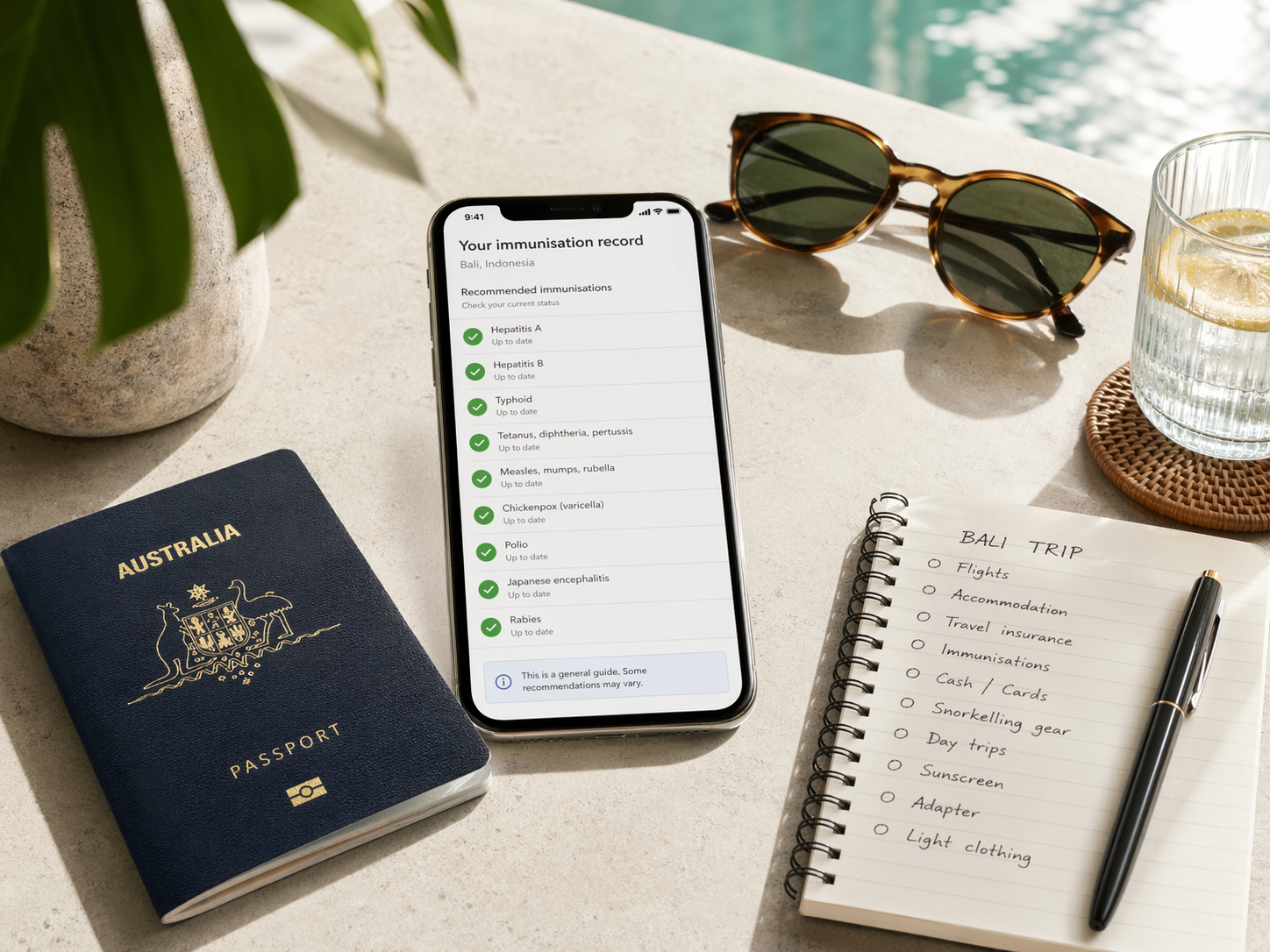
A practical Bali vaccine checklist for Australian travellers
Before your Bali trip, speak to your GP or travel clinic about:
whether your routine vaccines and boosters are current
whether Hepatitis A is recommended for you
whether Hepatitis B makes sense for your travel style
whether Typhoid is worth discussing based on your itinerary
whether Rabies should be considered
whether Japanese Encephalitis is relevant to your trip length or activities
whether your route into Indonesia creates any yellow fever certificate requirement
broader travel health issues such as dengue prevention, which still matters in Bali even though vaccination decisions are individual and mosquito prevention remains important
Final takeaway
The best vaccine strategy for Bali is not copying a random online list. It is starting early, checking your routine protection, and then tailoring the rest to your actual trip. For many Australians, the core conversation will include routine boosters, Hepatitis A, and possibly Typhoid or Hepatitis B. For others, especially longer-stay travellers, rural travellers, or people likely to be around animals, Rabies or Japanese Encephalitis may also matter. Official Australian guidance says to discuss travel vaccines with your doctor well before departure, and Bali-specific advice from Smartraveller makes that especially sensible.
If you are already in Bali and feeling unwell, Bali Belly Doctor can help assess symptoms and guide next steps.