
Best Travel Insurance for Bali: Comparing Major Providers for Australian Travellers in 2026
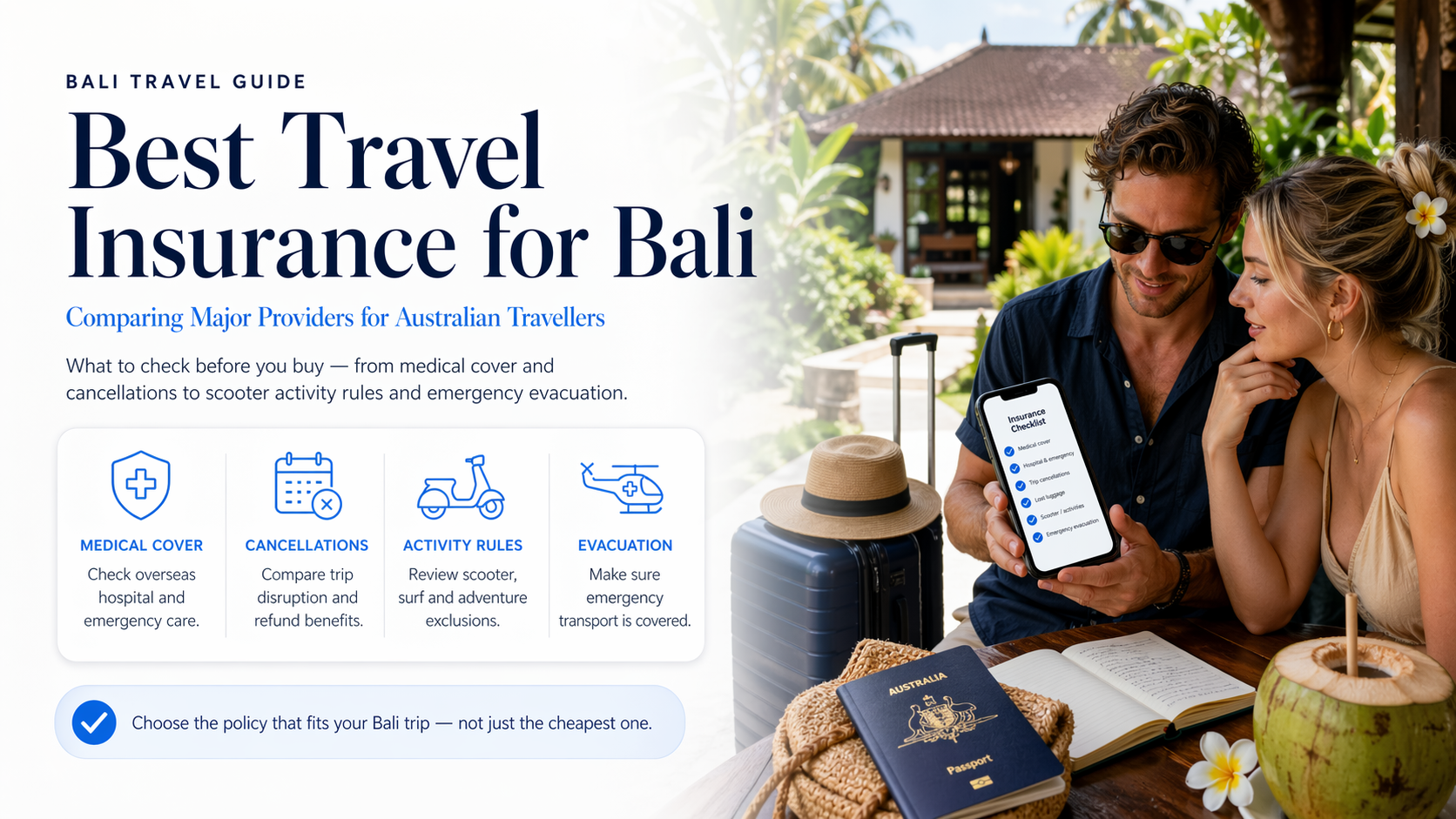
If you are heading to Bali from Australia, travel insurance is one of the most important things to organise before you fly. It is easy to focus on flights, villas, airport transfers, and restaurant bookings, but the real financial risk usually sits elsewhere: medical care, emergency evacuation, cancellations, delays, lost luggage, and activity-related exclusions.
For Bali travellers, that matters more than many people realise. Smartraveller says travel insurance is as essential as a passport for overseas travel, and says you should choose a policy that suits your destination, trip length, activities, age, and health. It also warns that not all policies cover the same things, and that credit-card insurance often covers fewer situations than a standard comprehensive policy.
From a Bali travel-health perspective, the biggest mistake Australians make is assuming all policies are basically the same. They are not. Some are closer to medical-only cover. Some are stronger on cancellation and luggage. Some publicly mention moped or scooter options, while others require much closer reading of the fine print. The smartest way to compare them is not by brand reputation alone, but by how well the policy fits the way you actually travel.
What matters most in travel insurance for Bali?
If you only check one thing, check the medical side first. Smartraveller’s CHOICE travel insurance guide says medical cover is the number one reason to buy international travel insurance, and also warns that pre-existing conditions can be excluded or only covered after assessment. Smartraveller separately notes that evacuations can cost thousands and are not covered by reciprocal health arrangements.
For Bali, the most important things to compare are:
overseas medical and hospital expenses
emergency medical evacuation and repatriation
cancellation and disruption cover
luggage and valuables
scooter, moped, surfing, diving, and other activity rules
pre-existing condition rules
annual multi-trip versus single-trip suitability
whether credit-card cover is truly enough for your trip
Smartraveller also says the PDS matters more than the marketing summary. Its CHOICE guide says the table of benefits is only an overall summary, and that the policy cover section, general exclusions, pre-existing conditions, word definitions, and claims section are all essential reading.
1. Cover-More
Cover-More is one of the more Bali-specific options for Australians because its Bali insurance page directly highlights the things many Bali travellers ask about most. It says all international plans include emergency medical cover, lost and stolen luggage, and 24/7 assistance, and it also advertises optional cancellation cover, moped cover, and adventure cover. The same page says Bali travellers can choose from three international travel insurance plans.
That makes Cover-More especially relevant for travellers who want a policy they can shape around Bali-style plans rather than just buying a generic international policy and hoping it fits. It is one of the clearer options if there is any chance your trip could include scooter riding or add-on activities.
2. Allianz
Allianz is easy to understand because it makes the difference between its main plan types very clear. Allianz says its Basic plan is designed to cover overseas emergency medical and hospital expenses, overseas emergency assistance, and personal liability. Its Comprehensive plan adds luggage and personal effects, cancellation costs, and travel delays. Allianz also says Basic is available only to travellers under 75, while Comprehensive is available to travellers of all ages, subject to conditions and any medical assessment requirements.
For Bali travellers, Allianz is one of the cleaner examples of the difference between medical-focused cover and broader comprehensive cover. If you want the simplest “medical-first” option, Basic is worth comparing. If you want stronger cancellation, baggage, and delay protection, Comprehensive is the more relevant policy to measure against the rest of the market.
3. Southern Cross Travel Insurance (SCTI)
SCTI is worth including because its Bali page clearly points travellers toward several relevant policy types: International Comprehensive, Annual Multi-trip, and International Medical Only. Its Medical Only policy page says it is designed for budget-conscious travellers looking only for medical expenses cover for overseas trips, and says that policy includes medical and evacuation cover.
That makes SCTI a strong option for readers who care most about hospital and evacuation protection and are less concerned about baggage or cancellation. It also makes SCTI useful to mention for frequent Bali travellers, because its Bali page directly points to Annual Multi-trip as one of the main pathways to consider.
4. Fast Cover
Fast Cover is useful because it has a clear tiered structure for Australians comparing Bali policies. Its Bali page says its cover can include overseas medical emergencies, trip cancellations, delays, and lost luggage. Fast Cover’s FAQ says its Basics policy focuses on emergency medical care. Its Standard Saver policy is described as mid-tier cover including overseas medical, trip cancellation, and luggage, while its Annual Multi-Trip page says it provides a Comprehensive level of cover within a 12-month policy period.
That makes Fast Cover a practical provider to compare if your readers want multiple levels rather than a single broad plan. It gives you a good example of the spectrum from medical-focused cover to broader comprehensive-style protection.
5. 1Cover
1Cover is a strong inclusion because its Bali and Asia pages are very explicit about Bali-relevant benefits. Its Bali page says its cover includes 24-hour overseas emergency medical assistance, ambulance fees, medical evacuations, and overseas emergency medical and hospital expenses. Its Asia page also says it covers riding mopeds and scooters in Asia as long as you hold the appropriate licence, with full terms and conditions applying.
For Australian travellers weighing up Bali insurance, that makes 1Cover especially relevant for people who want a provider that publicly addresses medical assistance and scooter-related travel more directly than many general travel-insurance landing pages do.
6. Medibank
Medibank is another provider Australians commonly compare for Bali. Its Bali and international travel pages say it offers hospital, accident, and medical evacuation cover overseas. Medibank also publicly says travellers can add cover for moped or scooter riding for an additional premium, and its comparison page says International Comprehensive includes cover for medical and dental emergencies, unforeseen cancellations, and valuables.
That makes Medibank particularly worth checking if you are already in its ecosystem, or if you know there is a real chance you will want optional moped or scooter cover on the trip.
Which provider looks best for different types of Bali travellers?
If you mainly want medical-first cover on a tighter budget, Allianz Basic, SCTI International Medical Only, and Fast Cover Basics are all reasonable providers to compare first, because they each publicly position these products around medical-focused cover rather than broad trip protection.
If you want broader comprehensive-style cover that includes stronger support for cancellations, luggage, and delays, Allianz Comprehensive, Fast Cover’s higher tiers, Cover-More with cancellation options, Medibank International Comprehensive, and 1Cover are all worth shortlisting.
If scooter or moped use is even a possibility, Cover-More, 1Cover, and Medibank deserve closer attention because their public pages explicitly mention moped or scooter cover pathways. That does not mean automatic cover in every situation, but it does mean they are clearer starting points for Bali-specific comparison.
What about credit-card travel insurance?
Credit-card travel insurance can be useful, but Smartraveller says you should be careful before defaulting to the “free” option. It warns that credit-card insurance often covers fewer situations and may have lower item limits than a standard comprehensive policy, and also says you usually need to activate it properly before you travel.
For Bali, that means you should not assume your credit card automatically gives you adequate cover for medical events, cancellations, valuables, scooter-related incidents, or longer trips. You need to check exactly how the cover works, how long each trip can be, and what exclusions apply.
The biggest mistake readers should avoid
The biggest mistake is buying on price alone without checking the details. Smartraveller says you should consider where you are going, how long you are going for, what you will do there, your age and health, and how much your valuables are worth before you choose a policy. It also says annual multi-trip and credit-card policies can restrict the length of each trip, and that basic medical-only policies usually do not cover property or cancellation the same way comprehensive plans do.
That is especially relevant for Bali. A cheap policy may still be the right one for a short, low-risk trip, but it may be the wrong fit if you want cancellation protection, luggage cover, water-sport flexibility, or scooter-related options.
Final verdict: which travel insurance is best for Bali?
There is no single best provider for every Australian travelling to Bali.
Cover-More stands out for travellers who want publicly advertised Bali-relevant add-ons like moped and adventure cover. Allianz is easy to compare because the Basic-versus-Comprehensive split is very clear. SCTI is strong for medical-only and frequent-traveller comparison. Fast Cover is useful for people who want several policy tiers. 1Cover is strong for readers who want prominent medical-assistance and scooter messaging. Medibank is a logical provider to compare if you want international medical cover plus optional moped or scooter add-ons.
The real answer is to choose the policy that best matches your Bali trip, not somebody else’s. If your trip includes a scooter, surfing, diving, expensive gear, or a pre-existing condition, those details matter more than brand familiarity. Smartraveller’s advice is still the best final filter: read the PDS, read the exclusions, and make sure the policy suits where you are going, what you are doing, and your own medical situation.