Swimmer’s Ear and Ear Infections in Bali: Travel Tips to Protect Your Holiday

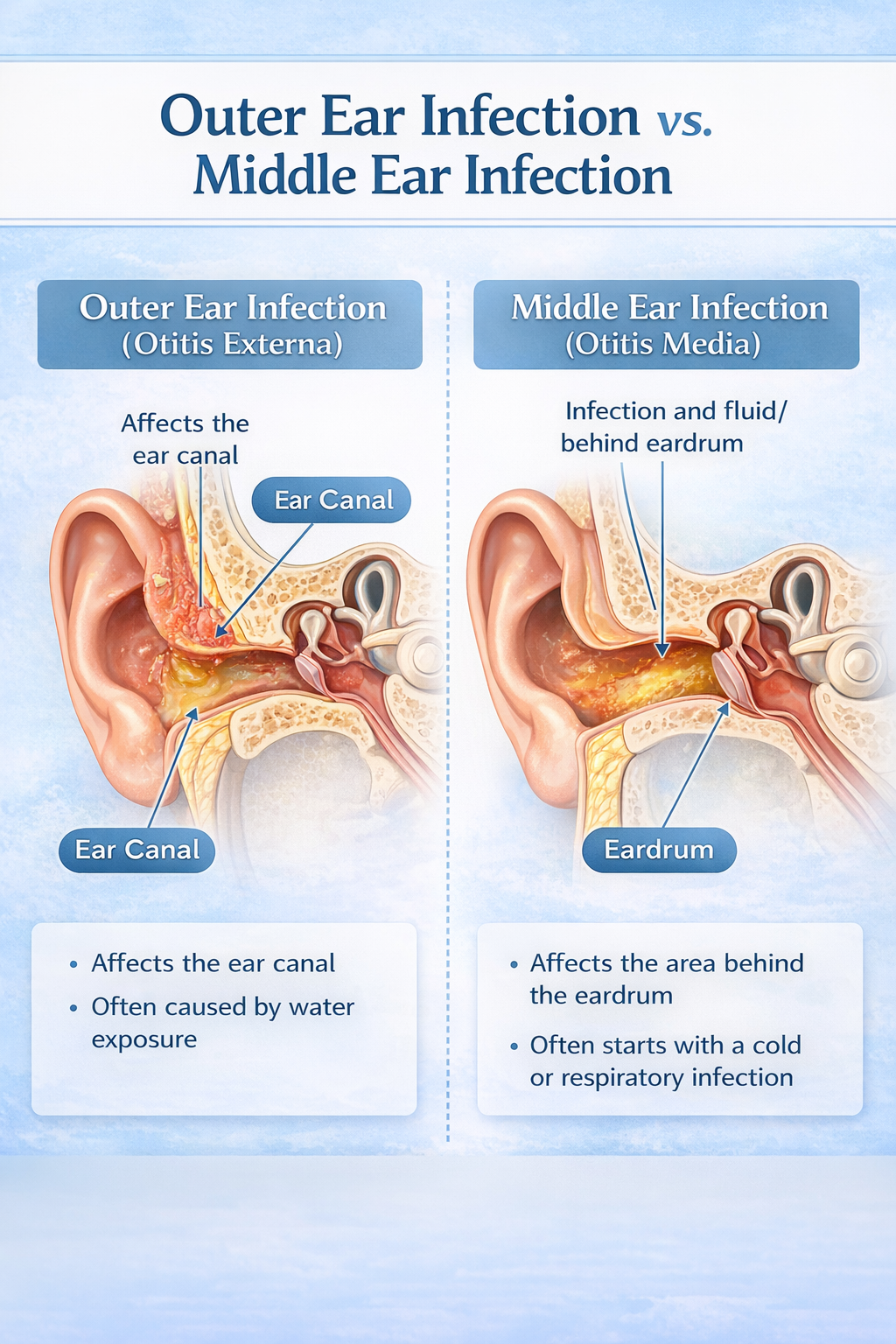
Bali is made for pool days, surf sessions, snorkelling trips, and long showers after the beach — but all that water exposure can sometimes lead to painful ear problems. For travellers, one of the most common is swimmer’s ear, also called otitis externa, which affects the outer ear canal. It typically causes itching, pain, swelling, tenderness, discharge, and sometimes muffled hearing. It is different from a middle ear infection, which happens deeper behind the eardrum.
If you are in Bali and develop ear pain after swimming, surfing, diving, or even repeated showering, it is worth taking seriously early. A mild blocked-ear feeling can quickly turn into a much more painful infection, especially if the skin inside the ear canal has been irritated by trapped moisture, scratching, or cotton buds.
What is swimmer’s ear?
Swimmer’s ear is an infection or inflammation of the outer ear canal. It often starts when water stays trapped in the ear, creating a damp environment that makes it easier for bacteria — and sometimes fungi — to grow. Symptoms often include itching inside the ear, pain when the ear is touched or tugged, redness, swelling, discharge, and reduced hearing.
This is not the same as a middle ear infection, which usually sits behind the eardrum and may be more associated with colds, upper respiratory infections, fever, or pressure-related symptoms. That distinction matters, because treatment is not always the same.
Why travellers in Bali get ear infections
For most travellers, the problem is not Bali itself — it is the combination of frequent water exposure, heat, sweat, repeated showers, earbuds, and over-cleaning the ears. Many people also make things worse by trying to “dry out” the ear with cotton buds or by scratching inside the canal, which damages the skin and makes infection more likely. The CDC specifically advises not putting objects into the ear canal and not trying to remove ear wax, because ear wax actually helps protect against infection.
If you are surfing every day, spending time in hotel pools, or diving while already congested, small ear issues can escalate fast and ruin a holiday. That is why prevention matters.
Early signs travellers should not ignore
Watch out for:
Itching inside the ear
Pain when touching or pulling the outer ear
A feeling of fullness or blockage
Muffled hearing
Fluid or discharge from the ear
Swelling or redness around the canal
Pain when chewing or moving the jaw
For children, signs can be less obvious. They may tug at the ear, become irritable, sleep poorly, or complain less clearly about pain or hearing changes.
What to do if you think you have an ear infection in Bali
The first step is simple: keep the ear dry. Stop swimming for the moment, avoid getting water into the ear in the shower, and do not put anything inside the canal. That means no cotton buds, no fingers, and no “digging around” to try to clear it.
For swimmer’s ear, treatment commonly involves prescription ear drops, sometimes combined with pain relief. Clinical guidance and public-health sources consistently point to ear drops as the main treatment for uncomplicated otitis externa, while oral antibiotics are usually not the first choice unless there is a specific reason.
One important caution for travellers: do not use drying drops or homemade drops if you have ear tubes, a punctured eardrum, ear drainage, or an existing ear infection unless a clinician has told you it is safe. The CDC specifically warns against using ear-drying drops in those situations.
Prevention tips for travellers in Bali
A few simple habits can dramatically reduce the risk of swimmer’s ear while travelling:
1. Dry your ears properly after swimming
Tilt your head to each side and let water drain out naturally. Dry the outside of the ear gently with a towel. Some people use a hair dryer on a very low setting, held at a safe distance, to help dry the ear canal.
2. Avoid cotton buds
Cotton buds can scratch the skin, push debris deeper, and strip away protective wax. This is one of the easiest mistakes to avoid.
3. Be careful with ear plugs and earbuds
If you use them, keep them clean. Dirty or poorly fitted items can irritate the ear canal or trap moisture.
4. Ask a doctor before using preventive ear drops
Preventive drying drops can be useful for some people, but not for everyone. They should be avoided if there is any chance of a damaged eardrum, tubes, active drainage, or current infection.
5. Get help early
The earlier swimmer’s ear is treated, the easier it usually is to manage. Waiting until the ear canal becomes very swollen can make treatment more painful and recovery slower.
When should a traveller in Bali see a doctor?
You should get medical advice promptly if you have ongoing ear pain, swelling, discharge, reduced hearing, or symptoms that are worsening instead of settling. Mayo Clinic advises seeking medical help even for mild swimmer’s ear symptoms, and urgent care is especially important if there is severe pain or fever.
For travellers, it also makes sense to get checked sooner rather than later if:
You are meant to fly soon
You have a child with ear pain
You have diabetes or are immunocompromised
There is blood, pus, or significant discharge
You cannot hear properly from the affected ear
The pain is strong enough to affect sleep or eating
Getting medical help in Bali
At Bali Belly Doctor, travellers can arrange a doctor home visit across South Bali, and the service is available daily from 8 AM to 11 PM. The clinic’s own website says the team commonly treats travel-related illness and can provide documentation for insurance claims.
If you are dealing with multiple travel-health issues, these guides may also help:
For extra reading from trusted public sources, you can also reference:

Final thoughts
A great Bali holiday can be derailed by something as small as water trapped in the ear. The good news is that swimmer’s ear is usually very manageable when recognised early. Keep your ears dry, avoid cotton buds, do not self-treat with drops if you are not sure your eardrum is intact, and get checked if the pain, discharge, or hearing changes are not settling.
If you are in Bali and your ear starts getting worse, do not wait until it becomes severe. Fast assessment and the right treatment can make a big difference — and help you get back to enjoying your trip.