
Aussies in Bali: What to Do If You Get Bali Belly

On a Bali holiday and suddenly feeling sick to your stomach? You’re not alone. Every year, thousands of Australian travellers get hit with what’s commonly called Bali Belly—a stomach bug that can strike fast and ruin a trip if dehydration isn’t managed early.
This guide covers what Aussies should look for, what to do first, when to worry, and how to get medical help so you can get back to enjoying Bali.
Fastest help: WhatsApp
Clinic directions: Google Maps
Home visit option: Doctor Home Visit
TL;DR (save this)
Start with fluids + electrolytes (ORS), not coffee or sports drinks.
Rest, keep food bland, and avoid alcohol for 24–48 hours.
Don’t use anti-diarrhoea meds if you have fever or blood in stool.
Red flags: severe dehydration, persistent vomiting, severe pain, confusion, fainting, blood in stool → get assessed urgently.
Most cases improve within a couple of days, but some need treatment and monitoring.
High-trust reference: Traveller’s diarrhea basics
What is Bali Belly?
“Bali Belly” is a broad travel term for traveller’s diarrhoea / gastroenteritis—usually caused by bacteria, viruses, or (less commonly) parasites your gut isn’t used to. Symptoms can include:
Nausea or vomiting
Frequent or watery diarrhoea
Abdominal cramps
Bloating or gas
Low-grade fever
Mild to moderate dehydration
Symptoms often show up within 6–24 hours, but timing varies depending on the cause.
If you want the full symptom-and-treatment hub, start here: Bali Belly Treatment
Why Aussies get it so often
Australians are one of the largest visitor groups in Bali, so the odds alone are high. But the bigger reason is exposure to unfamiliar bugs—your immune system hasn’t built the same tolerance to local strains you might encounter through food, water, surfaces, or hands.
It’s not only about what you eat or drink. Germs can spread through:
Shared menus, phones, money, counters
Public bathrooms
Poolside surfaces and shared towels
Hand-to-mouth contact without noticing
Practical prevention tips here: How To Prevent Bali Belly and Bali Belly Tips
What to do if you get sick (step-by-step)
1) Hydrate the right way (this is the priority)
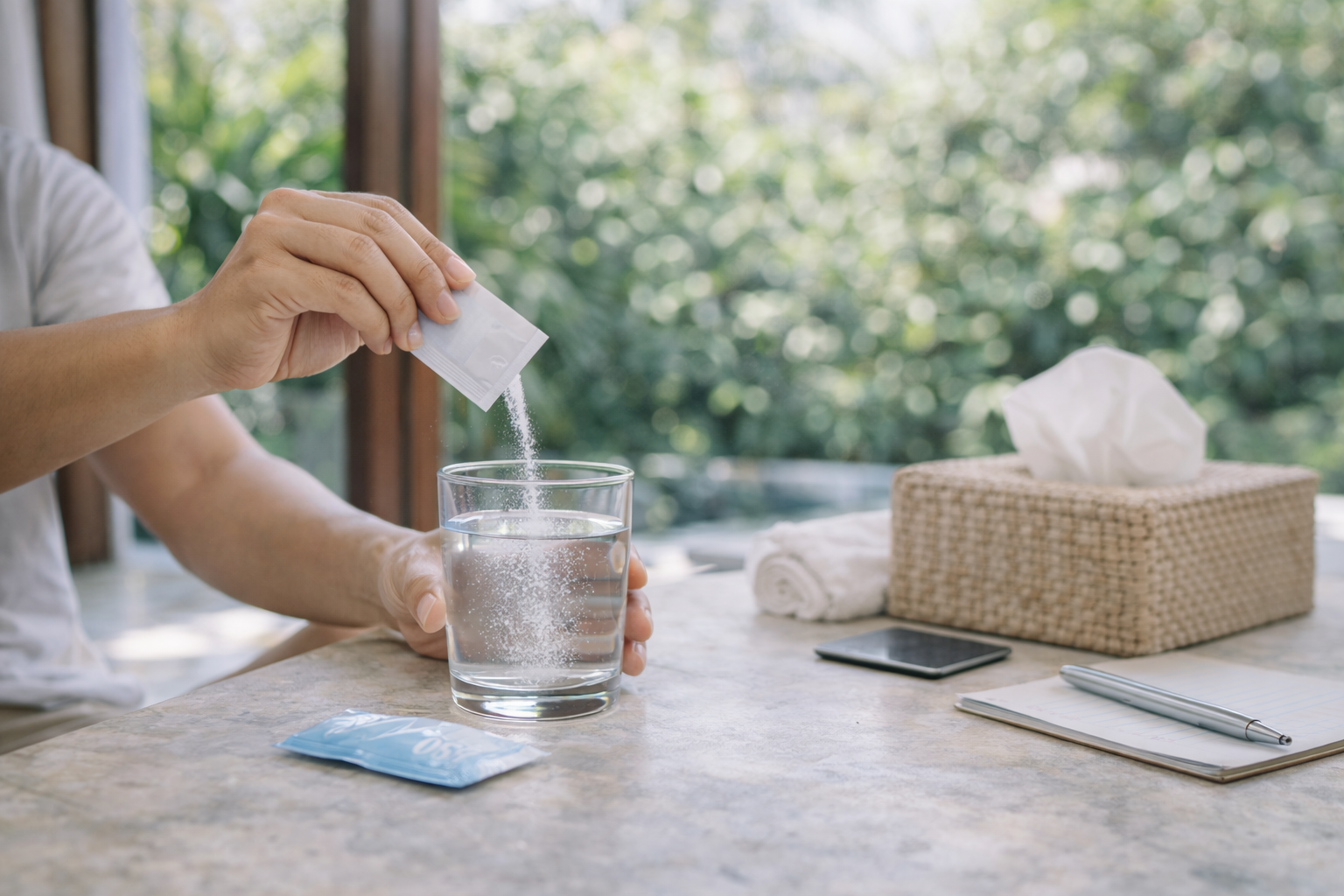
Take small, frequent sips of fluid and use electrolytes if you can.
High-trust reference: Oral rehydration salts (ORS) guidance
2) Rest
Give your body time to recover—especially after flights, heat exposure, and poor sleep.
3) Eat bland, simple foods (when you can)
If you’re eating: bananas, toast, plain rice, crackers, soup.
Avoid alcohol, spicy foods, and heavy dairy until symptoms settle.
4) Use medication cautiously
Some over-the-counter anti-diarrhoea meds can help short-term in adults, but avoid them if you have:
fever
blood in stool
severe abdominal pain
If you’re unsure, get assessed—especially if symptoms are getting worse.
When to call a doctor (don’t wait for these)
Seek urgent help if you have:
Persistent vomiting (can’t keep fluids down)
Blood in stool or black/tarry stool
Severe dehydration (very dark urine, dizziness, weakness, fainting)
Severe or worsening abdominal pain
Confusion, collapse, chest pain, breathing difficulty
High fever that isn’t settling
If you’re too unwell to travel, request a visit: Doctor Home Visit
How Bali Belly Doctor helps (clinic or villa)
At Bali Belly Doctor, we specialise in treating travellers and expats with stomach illness, food poisoning, and dehydration—either at the clinic or at your accommodation. For travellers who want a simple overview of our approach, you can also see Dr Ari .
Common care may include (case-by-case):
Clinical assessment + red-flag screening
Hydration support (oral advice and/or IV fluids when appropriate)
Symptom relief (anti-nausea or antispasmodic when indicated)
Targeted testing when needed (e.g., dengue screening if fever features)
Clear aftercare and follow-up guidance
If IV hydration is clinically appropriate, learn more here: IV Drip For Bali Belly
Why dehydration is the biggest risk
Vomiting and diarrhoea can drain fluids and electrolytes quickly—especially in Bali’s heat. Many travellers feel better once hydration is corrected and nausea is controlled, but recovery still depends on the cause and severity.
If you’re not improving within 48–72 hours, or symptoms are severe from the start, get assessed.

Does travel insurance cover Bali Belly?
Often, medically necessary care can be claimable depending on your policy (consultation, diagnostics, clinically indicated IV hydration, prescriptions). Coverage varies, so check your insurer’s rules and keep all documents. We can provide documentation/receipts on request—just mention it when booking.
Don’t let Bali Belly ruin your holiday
Most cases are treatable and improve with the right hydration and rest. The key is not letting dehydration spiral—and not “pushing through” severe symptoms.
If you’re worried or getting worse, reach out early.
Book now — we’re ready when you need us
Location: Jl Sunset Road no.27 (within Revive Medical), Kuta
Email: [email protected]
Open: 8:00am – 11:00pm daily