
Bringing Prescription Medication to Bali: What Travellers Need to Know (2026 Update)

Last updated: January 2026
Planning a trip to Bali and bringing prescription medications with you? While travellers are generally allowed to bring personal medications into Indonesia, it’s important to follow local regulations to avoid issues at customs and ensure you have access to your essential treatments during your stay.
This updated guide explains what to prepare before you travel, how to carry your medications safely, and what to do if you need medical help while in Bali.
1. Check Indonesian Medication Regulations Before You Travel
Travelling to Indonesia with prescription medications for personal use is generally permitted, but there are important conditions. Indonesia’s customs authority may request documentation for certain medications.
You should:
Declare medications if requested on your Customs Declaration (CD) upon arrival.
Carry a doctor’s letter stating your condition (if appropriate), medication names (generic names where possible), daily dosage, and duration of treatment.
Carry a copy of your original prescription.
If you are carrying any medication that may fall under controlled or restricted substances, additional documentation may be required, and quantities should not exceed what is reasonably needed for personal use during your stay.
Official guidance from Indonesian Customs can be found here:
https://www.beacukai.go.id/
General travel advice on carrying medications is available from:
https://wwwnc.cdc.gov/travel/page/traveling-with-medicine
https://www.smartraveller.gov.au/destinations/asia/indonesia
2. Bring Enough Medication for Your Entire Trip
Always bring enough of your prescription medication to cover your full stay in Bali, plus a buffer in case of travel delays or itinerary changes. Some medications may not be readily available in Indonesia, and brand names may differ from those used in your home country.
3. Keep Medications in Original Packaging
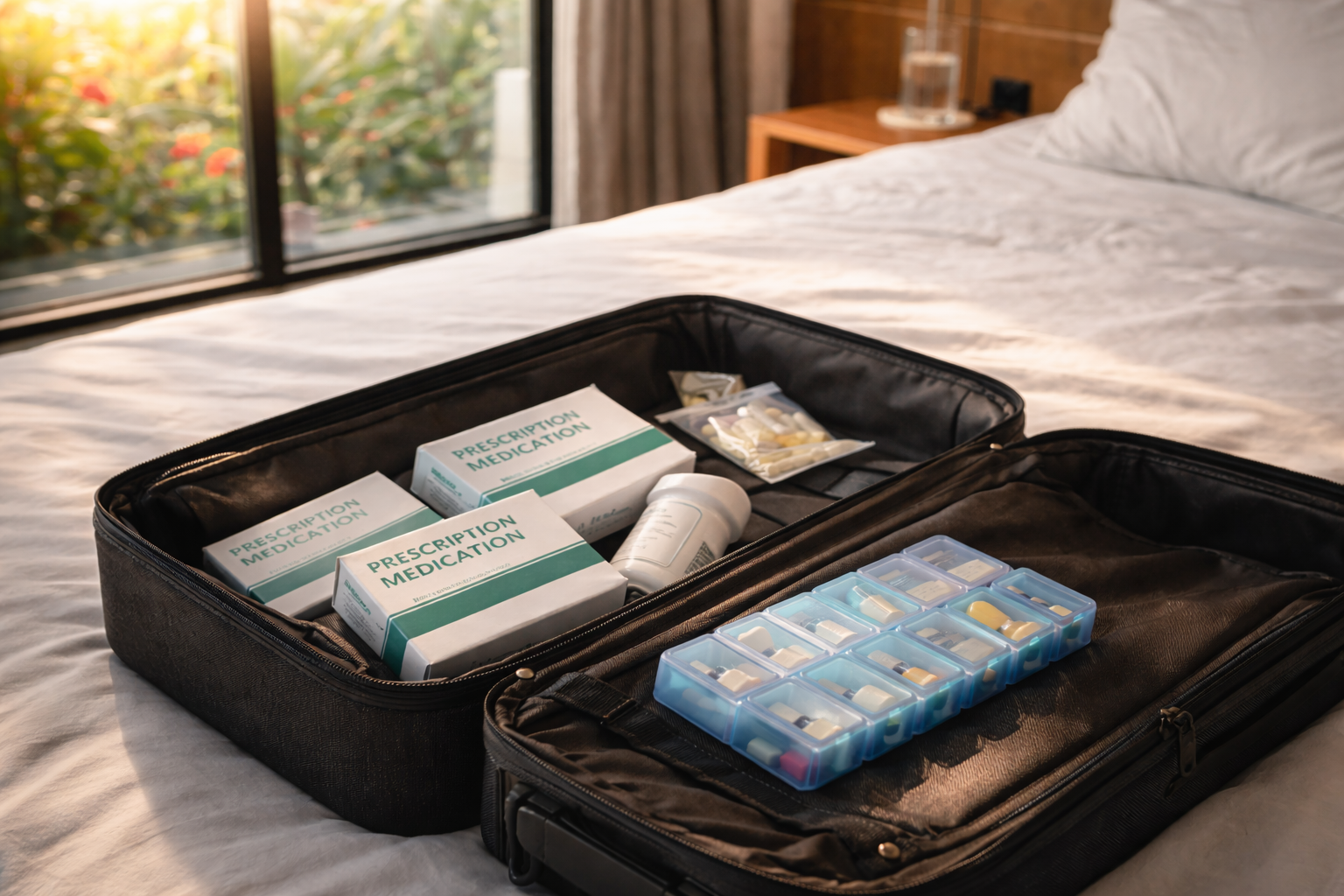
Keep all prescription medications in their original pharmacy packaging with clearly visible labels. This reduces the likelihood of misunderstandings at airport security or customs.
Loose pills in unlabelled containers are more likely to be questioned or delayed.
4. Carry a Copy of Your Prescription and Doctor’s Letter
Always keep both a digital and printed copy of:
Your prescription
A doctor’s letter explaining the medical need for the medication
This documentation is helpful at customs and if you need to consult a doctor in Bali.
5. Research Local Medical Support in Bali
Even with preparation, travellers can become unwell or misplace medication. Knowing where to seek medical care in advance saves time and stress.
If you require medical care in Bali, travellers often consult local clinics or arrange doctor visits to their accommodation. Some visitors use services such as Revive Medical for in-clinic consultations or hotel and villa visits. You can also review our Bali Belly Doctor guide on what to do if you get sick in Bali

6. Understand Storage Requirements in a Tropical Climate
Bali’s heat and humidity can affect medication stability. Some medicines — such as insulin or other temperature-sensitive treatments — may require careful storage.
Plan ahead by:
Using insulated medication travel pouches
Storing medications in air-conditioned rooms
Avoiding leaving medications in hot cars or direct sunlight
Additional travel health storage considerations can be found in the CDC Yellow Book:
7. Declare Medications at Customs if Required
If customs officials request you to declare medications, comply fully and present your documentation. Transparency and preparation significantly reduce the risk of delays or confiscation.
8. Keep Medications in Your Carry-On Luggage
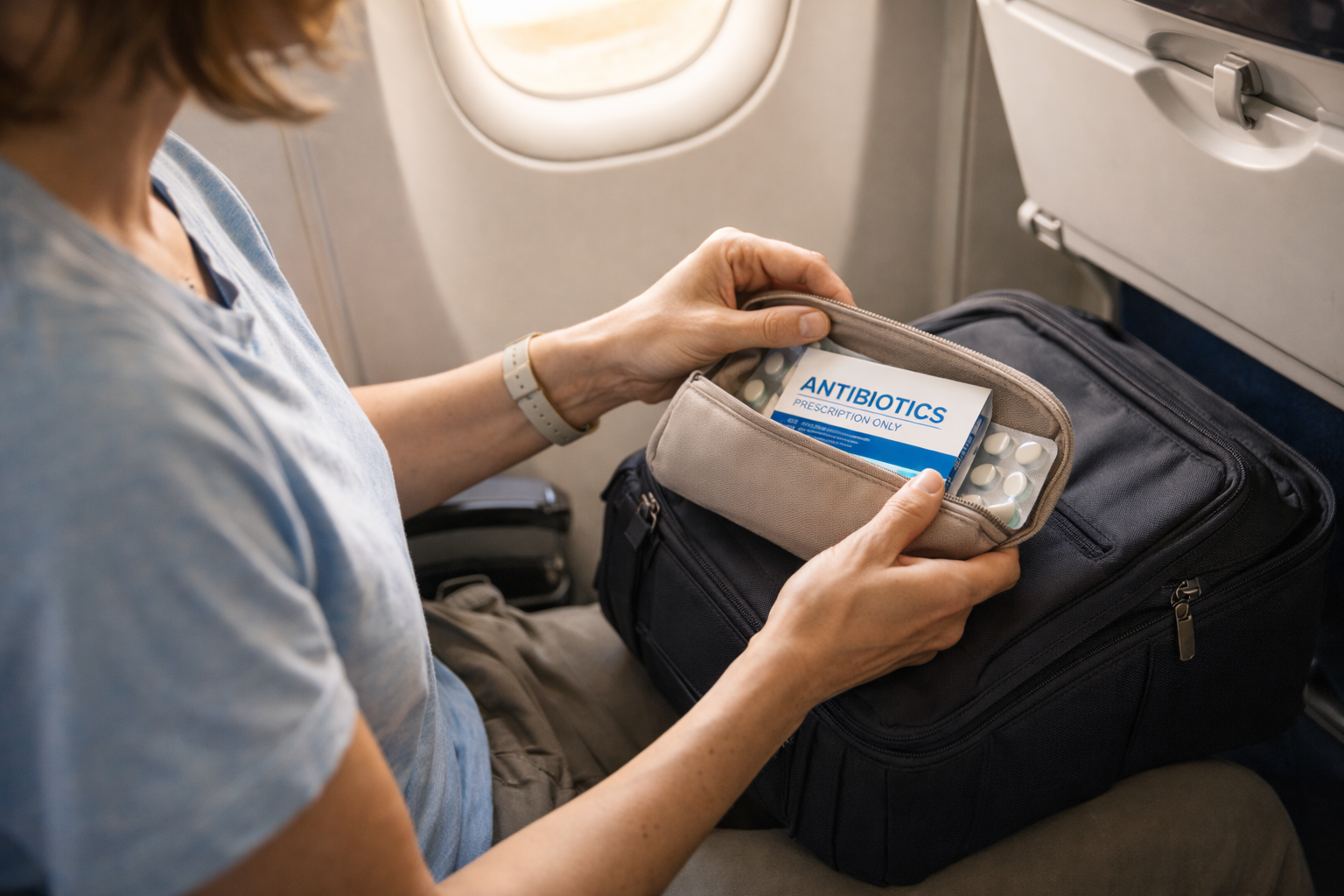
Always pack essential medications in your carry-on luggage, not checked baggage. This ensures you have access to them during the journey and protects you if checked luggage is delayed or lost.
9. Speak to Your Healthcare Provider Before You Travel
Before travelling to Bali, speak with your doctor or pharmacist about:
Adjusting medication timing across time zones
Side effects in hot climates
Backup medications for common travel illnesses
Documentation needed for controlled medications
This is especially important for travellers with chronic conditions.
10. Medications Banned or Restricted in Indonesia
Indonesia has strict laws around certain medications and substances. Some drugs that are legal or commonly prescribed in other countries may be banned, restricted, or tightly controlled when entering Indonesia.
Before travelling, always check current guidance and confirm your specific medication is permitted.
Common categories of medications that may be banned or restricted include:
• Narcotics and opioid painkillers
Medications containing strong opioids (such as morphine, codeine-based products, oxycodone, fentanyl, or tramadol in some forms) are tightly controlled. Importing these without proper authorisation and documentation may result in confiscation or legal issues.
(https://www.smartraveller.gov.au/destinations/asia/indonesia)
• Certain ADHD medications and stimulants
Some stimulant medications used to treat ADHD (such as amphetamine-based medicines) may be restricted or classified as controlled substances in Indonesia. Travellers should carry a doctor’s letter and only bring quantities appropriate for personal use.
(https://wwwnc.cdc.gov/travel/page/traveling-with-medicine)
• Medical cannabis and cannabis-derived products
Cannabis, CBD oil, THC products, and cannabis-derived medications are illegal in Indonesia, even if prescribed in your home country. These products should not be brought into Bali under any circumstances.
(https://www.smartraveller.gov.au/destinations/asia/indonesia)
• Strong sedatives and sleeping medications
Certain benzodiazepines and sedative medications may be restricted. Travellers should carry original prescriptions and supporting documentation.
(https://wwwnc.cdc.gov/travel/page/traveling-with-medicine)
• Medications containing pseudoephedrine or codeine
Some cold and flu medications that contain pseudoephedrine or codeine may be restricted. Check ingredient lists carefully before travelling.
(https://www.beacukai.go.id)
What to Do If You’re Unsure About Your Medication
If you’re not sure whether your medication is allowed:
Check official Indonesian Customs guidance (https://www.beacukai.go.id)
Review your government travel advisory (e.g. Smartraveller for Australians: https://www.smartraveller.gov.au/destinations/asia/indonesia)
Speak to your prescribing doctor before travel
Carry your medication in original packaging with a doctor’s letter
Only bring quantities needed for personal use
Final Thoughts
Bringing prescription medication to Bali is generally straightforward when you prepare properly, but it requires attention to documentation and safe storage — especially in a tropical environment.
Carrying medications in original packaging, bringing appropriate documentation, and planning for local storage conditions can help ensure a smooth, stress-free trip.