
Street Food in Bali: How to Eat Like a Pro Without Getting Bali Belly
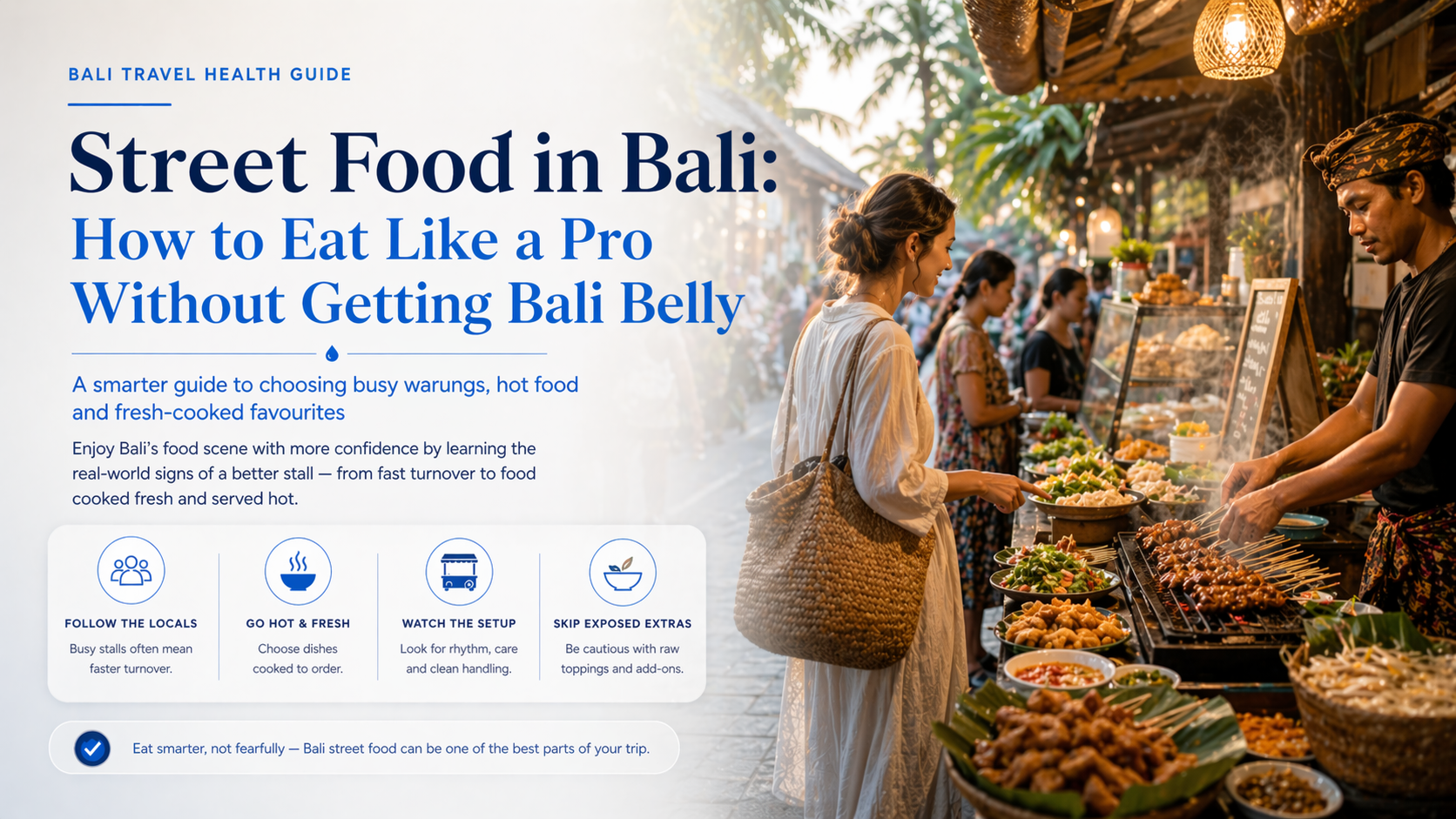
Trying street food in Bali is one of the best parts of being here. Some of the most memorable meals on the island are not in polished restaurants or hotel dining rooms. They are in busy roadside stalls, humble local warungs, smoky satay stands, and late-night food carts serving dishes that locals eat every day.
The key is not avoiding street food altogether. The key is learning how to choose it better.
At Bali Belly Doctor, we see plenty of travellers who assume street food is always the cause when they get sick. Sometimes it is. Sometimes it is not. The smarter way to approach Bali street food is to stop thinking in extremes. You do not need to fear it, but you do need to read the signs.
A good stall usually tells you a lot before you even order. Food is moving. People are lining up. The cook is actively preparing dishes. Nothing looks forgotten, tired, or left sitting in the heat for hours. If you want to enjoy Bali’s food scene without spending your holiday in bed, learning how to spot those clues makes a big difference.
Is street food in Bali safe?
Street food in Bali can absolutely be worth trying, but it pays to be selective. Some stalls are excellent. Others are not. The goal is to stop thinking like a nervous tourist and start thinking like someone who understands how Bali street food works in real life.
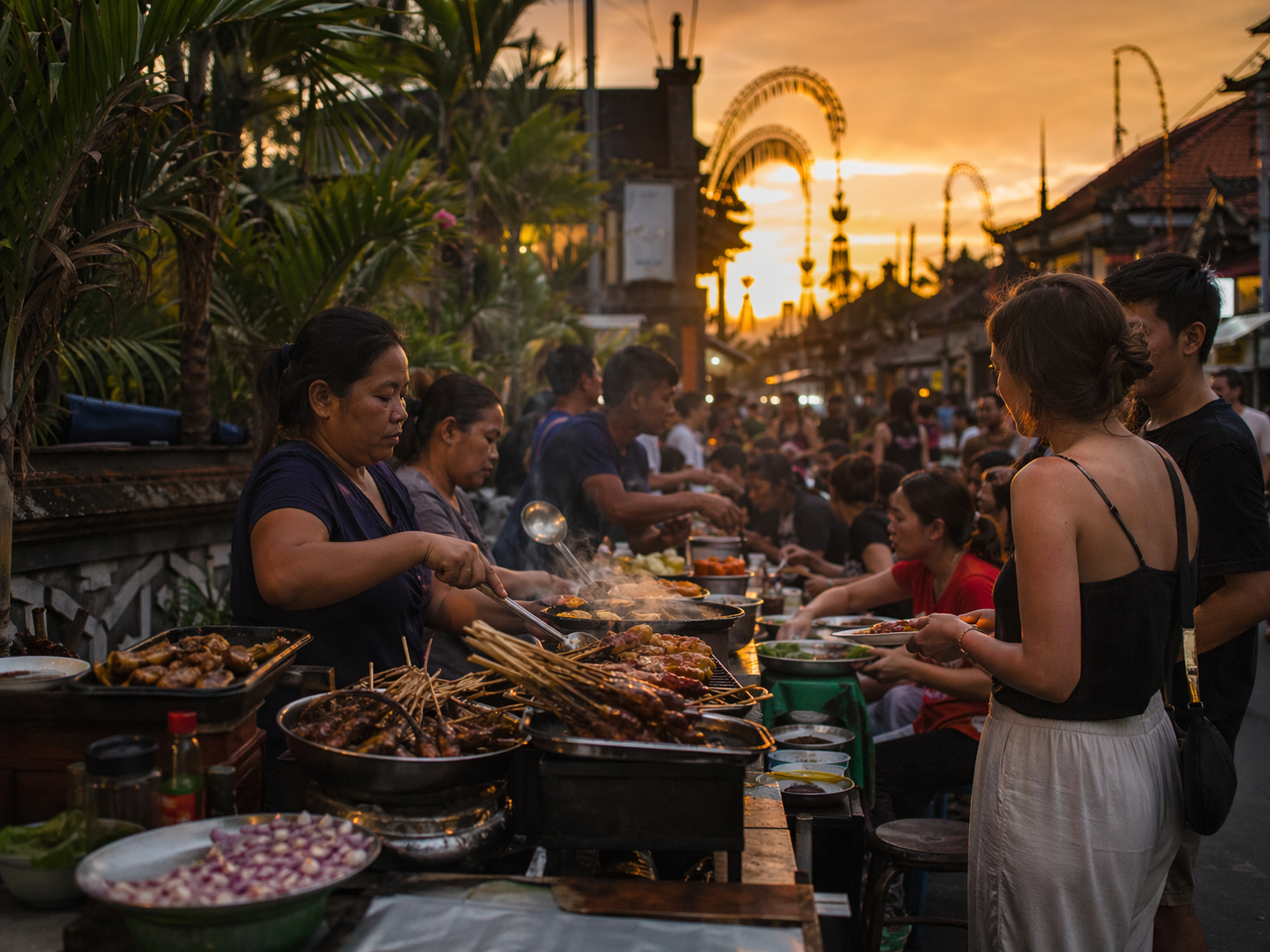
A stall with real rhythm is usually a better sign than a stall that simply looks pretty. Busy turnover matters. Food that is being cooked constantly and served quickly is generally a stronger bet than trays of food that have been sitting exposed. Bali’s climate is hot, humid, and fast-moving. Food that sits around too long can become a problem quickly.
Follow the locals — but use common sense
One of the best street food rules in Bali is simple: watch where local people actually eat.
If a stall is full of drivers, shop staff, workers on lunch break, or families picking up dinner, that is often a very good sign. It usually means the food is trusted, popular, and moving quickly. High turnover is one of the biggest real-world clues that ingredients are being used fresh rather than hanging around too long.
That said, do not follow a crowd blindly. A line helps, but it is still worth looking at what is happening at the cooking station. A smart traveller watches the whole setup, not just the popularity.
Choose stalls with fast turnover
This is one of the most useful Bali street food habits you can develop.
A stall with fast turnover usually means ingredients are being replenished constantly, the vendor is making fresh batches, and the dishes are not sitting around waiting for the next customer. In Bali, especially during hot weather, that matters.
A slow, empty stall in the middle of a busy food area is often a sign to keep walking.
Go for food cooked fresh and served hot
If you want to reduce your chances of Bali Belly, this is one of the easiest rules to follow.
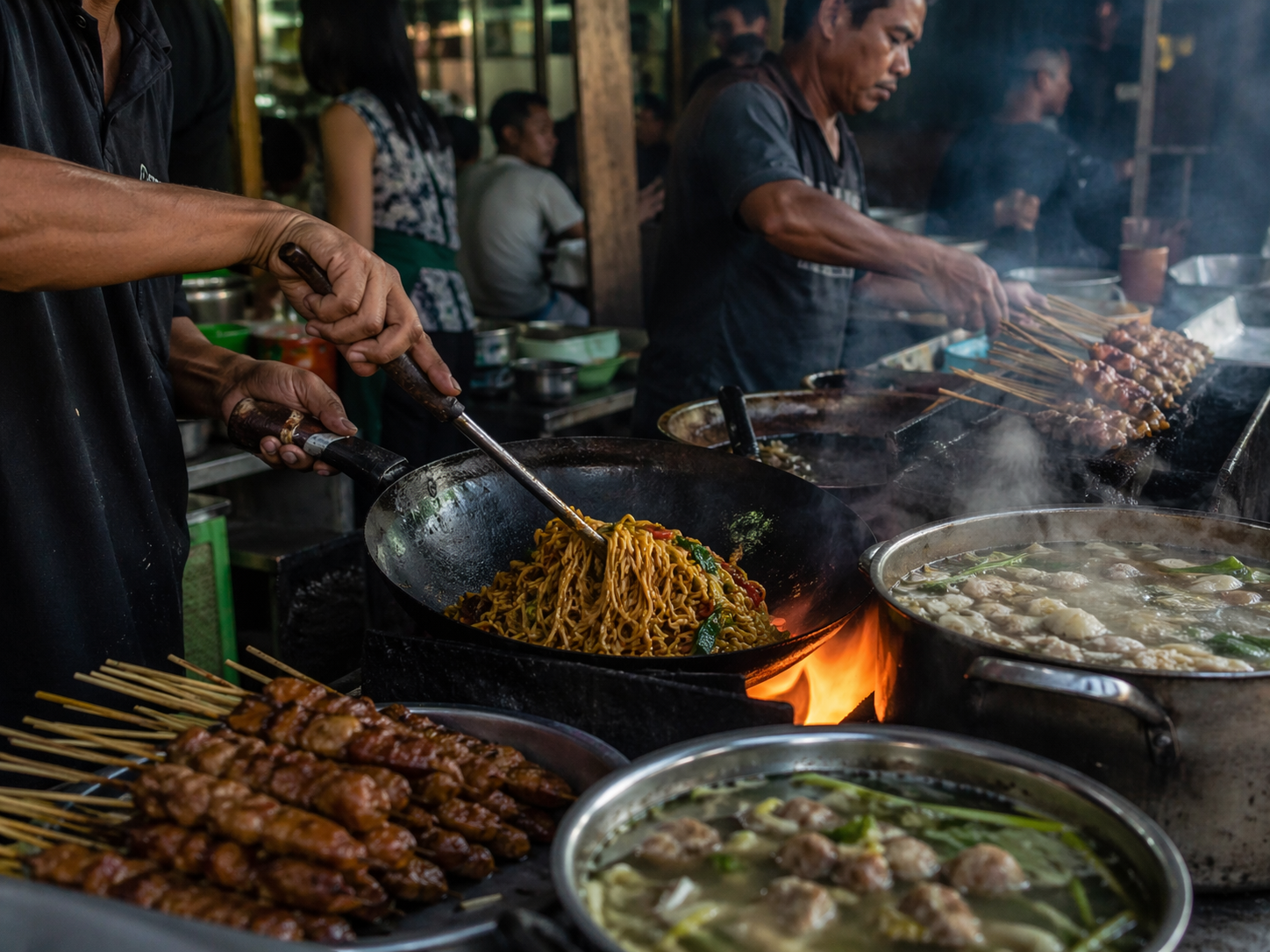
Freshly grilled, stir-fried, boiled, or cooked-to-order dishes are usually a smarter choice than anything that looks like it has been sitting in trays for a long time. If it is coming straight from the grill, wok, or pot, that is usually a stronger sign than something already plated and waiting.
This is one reason simple local dishes often work well. A good plate of nasi goreng, mie goreng, satay, soup, or grilled chicken cooked fresh in front of you is often a better choice than chasing the most adventurous-looking option just because it feels more exciting.
Learn to read the stall, not just the menu
This is where experience matters most.
A good Bali street food stall usually has a certain flow. The vendor looks focused. Utensils are being used constantly. Ingredients look like they are being handled with purpose. Food is not sitting untouched. The setup may be simple, but it feels alive and active.
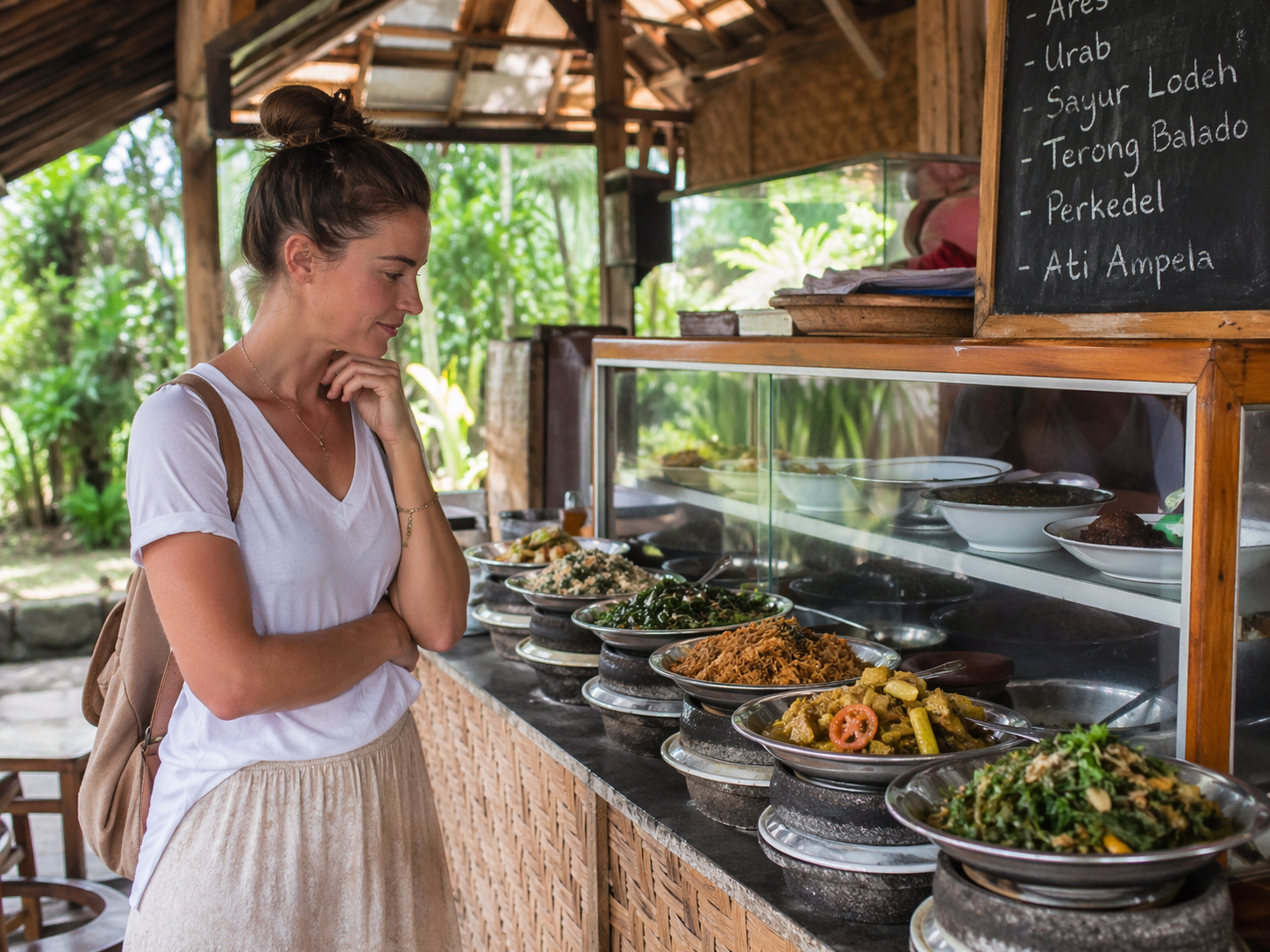
Be more cautious if cooked food looks like it has clearly been sitting out for too long, if flies are everywhere, if ingredients look dry or tired, or if the vendor seems careless. You do not need perfection, but you do want signs that the stall is functioning well.
Be careful with raw extras and exposed toppings
Very often, it is not the hot main dish that causes problems. It is the little extras.
Raw garnish, uncovered sambal, chopped salad, pre-cut fruit, or toppings left sitting out in the open can be the weak point in an otherwise decent meal. This is where travellers often get overconfident. The grilled food looks great, so they assume everything else around it is equally safe.
It is worth being more selective with these add-ons, especially if they look like they have been exposed for a long time.
Keep it simple on your first day or two
A common traveller mistake in Bali is trying to do too much too fast.
You land tired, hot, maybe a little dehydrated, and then jump straight into rich, spicy, unfamiliar food from the first stall you see. Even if the food itself is fine, your body may not be operating at its best yet.
That does not mean you need to eat bland food. It just means it is smart to ease in. Start with simpler, freshly cooked dishes and build from there. A lot of travellers get into trouble because they treat their first 24 hours like a food challenge.
Respect the stall’s specialty
A very useful Bali rule is to order the thing the stall is clearly known for.
If a vendor is busy making one or two dishes over and over, that is usually a good sign. The workflow is sharper, the food moves faster, and the stall has likely built its reputation around doing those items well.
If the menu is huge, random, and everything looks half-prepared, that is less reassuring. In Bali, specialists are often safer than generalists.
Street food is not the only cause of Bali Belly
This is important.
A lot of travellers automatically blame street food, but Bali Belly can come from many different settings. Restaurants, cafés, hotel breakfasts, buffets, beach clubs, villas, and catered meals can all be part of the picture too. Street food is not the only risk.
That is why the smarter approach is not “avoid street food.” It is “be selective wherever you eat.”
If food looks tired, if turnover is poor, if the setup feels careless, or if something seems off, it does not matter whether you are at a roadside stall or a polished venue. The same common sense still applies.
What to do if symptoms start
If you begin getting diarrhoea, cramps, nausea, vomiting, bloating, or weakness, the best move is to slow things down early.
Rest. Hydrate. Eat lightly. Do not keep pushing through tours, beach clubs, long drives, and alcohol because you do not want to lose a day of your trip. Travellers often make themselves much worse by trying to “walk it off.”
Early recovery is usually easier than late recovery. The sooner you listen to your body, the better.
When it may be something more serious
Most mild stomach bugs improve with time, rest, and fluids. But some symptoms should not be brushed off.
Pay closer attention if you have severe abdominal pain, repeated vomiting, high fever, blood in the stool, clear signs of dehydration, or symptoms that are getting worse rather than better. Those are the situations where it makes sense to get checked rather than waiting and hoping.
When to see a doctor in Bali
If symptoms are severe, prolonged, or stopping you from keeping fluids down, it is worth getting medical advice early. Bali Belly Doctor can assess travellers in-clinic or by call-out, help check hydration status, review symptoms properly, and guide treatment depending on how mild or serious the illness appears.
That is especially important if you are travelling with children, feeling weak and dizzy, or trying to recover before a flight or boat trip.

Final takeaway
The best Bali street food strategy is not fear. It is pattern recognition.
Look for busy stalls, fast turnover, fresh cooking, focused vendors, and dishes that are clearly moving. Be more cautious with tired-looking setups, exposed toppings, slow stalls, and anything that feels neglected. If something looks off, trust that instinct and move on. Bali has no shortage of great places to eat.
Street food is one of the best parts of this island. You do not need to skip it. You just need to eat a little smarter.
FAQ section
Is street food in Bali always unsafe?
No. Plenty of street food in Bali is excellent. The real issue is choosing stalls carefully rather than assuming every vendor is the same.
What is the safest type of Bali street food to try first?
Freshly cooked hot dishes from busy stalls are usually a stronger starting point than food that has been sitting out.
Does Bali Belly only come from street food?
No. Travellers can get sick from many different food settings, including restaurants, cafés, buffets, and hotel food.
When should I get checked by a doctor in Bali?
If symptoms are severe, not improving, or you are becoming dehydrated, it is sensible to get medical advice early.