
What to Eat When You Have Bali Belly: Best Foods, What to Avoid, and How to Recover Faster
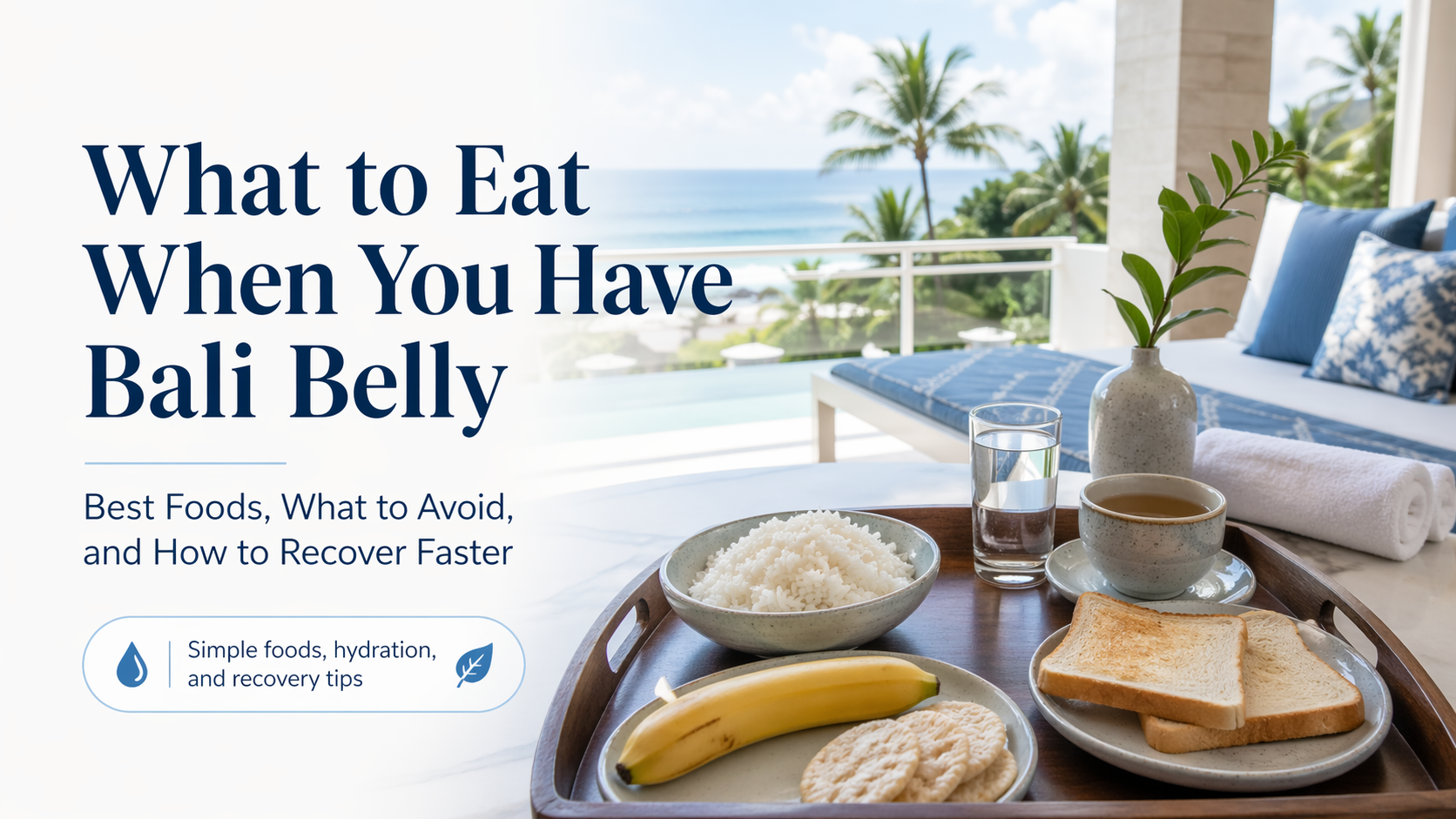
If you have Bali Belly, one of the first questions you will probably ask is simple: what should I eat right now? When your stomach is upset, the goal is not to eat a perfect diet. The goal is to stay hydrated, avoid irritating your gut, and ease back into food gently. Australian guidance on gastroenteritis recommends drinking plenty of fluids, taking small sips if needed, and starting with bland foods such as crackers, rice, clear soup, banana, and dry toast when you feel ready to eat.
What to eat when you have Bali Belly
When symptoms are active, stick to small amounts of bland, easy-to-digest food. Good first options include plain rice, dry toast, crackers, bananas, plain noodles, and clear soup or broth. Healthdirect specifically recommends starting with bland foods such as crackers, rice, clear soup, banana, or dry toast when you feel hungry.
These foods are popular because they are usually gentler on the stomach than rich, spicy, oily, or very heavy meals. You are not trying to “eat healthy” in the normal sense here — you are trying to eat safely and simply while your stomach settles. That usually means smaller portions, slower eating, and choosing foods that do not leave you feeling worse afterwards.
Best food for Bali Belly recovery
If you are searching for the best food for Bali Belly, think in stages.
At the beginning, when you still feel nauseous, crampy, or weak, stay with the blandest foods. Once symptoms begin to ease, you can slowly add in simple meals like plain pasta, boiled potatoes, light soups, and other gentle foods that do not feel greasy or overly seasoned. Healthdirect advises managing your diet until you get back to normal by choosing bland foods and avoiding fatty foods or foods high in insoluble fibre while diarrhoea is settling.
If you are wondering what to eat after Bali Belly, the answer is to return to normal food gradually, not all at once. Even if you suddenly feel better, that does not mean your stomach is ready for cocktails, chilli, fried food, or a giant buffet breakfast. Going too hard too early is one of the easiest ways to feel rough again. Healthdirect notes that most people recover on their own, but the practical recovery tips still centre on fluids, bland foods, and rest.
What to drink with Bali Belly
Hydration matters just as much as food — and often more.
Healthdirect advises drinking plenty of fluids to avoid dehydration, and recommends sipping clear fluids every 5 to 10 minutes if needed. It also warns that drinks high in sugar can make diarrhoea worse.
Better options usually include:
water
oral rehydration solution
clear broth
simple electrolyte fluids used appropriately
If you are vomiting or your stomach feels very sensitive, try small sips often instead of large drinks all at once. That is often easier to tolerate and more realistic when you feel weak or nauseous.

Foods and drinks to avoid
When your stomach is already irritated, some foods are much more likely to make things worse.
Healthdirect advises avoiding drinks that are high in sugar because they can worsen diarrhoea. It also advises, while diarrhoea is settling, avoiding alcohol, caffeine, fatty foods, foods high in insoluble fibre, and products with artificial sweeteners.
That usually means avoiding:
spicy food
greasy or fried meals
alcohol
coffee and energy drinks
sugary soft drinks
artificial sweeteners
very rich dairy-heavy meals if they seem to trigger symptoms
This is not the time to test your stomach with a spicy curry, greasy burger, or a long lunch with cocktails.
How long does Bali Belly last?
For most travellers, Bali Belly is unpleasant but short-lived. Healthdirect says vomiting usually lasts 1 to 2 days, and diarrhoea usually lasts around 1 to 3 days, though it can last up to 10 days in some cases. Better Health Channel also says traveller’s diarrhoea usually clears up by itself within a few days.
That means the usual recovery pattern looks something like this:
day 1: fluids first, bland foods only if tolerated
day 2 to 3: continued hydration, gentle meals, gradual improvement
after that: slowly return to more normal food as symptoms settle
If your symptoms are not improving, or they are becoming more severe instead of less severe, that is when it makes sense to stop treating it like a routine stomach bug and get checked properly.
Could Bali Belly be a parasite?
Sometimes people search bali belly parasite because their symptoms do not seem to go away properly.
That concern is not random. Healthdirect says diarrhoea can be caused by infections including viruses, bacteria, and parasites, and notes that ongoing diarrhoea can happen after overseas travel.
That does not mean every stubborn case is a parasite. But if you still have ongoing diarrhoea, bloating, stomach upset, or you feel like your gut has never really gone back to normal after travel, it is worth seeing a doctor instead of guessing.

How to recover from Bali Belly faster
There is no magic trick, but there are a few things that usually help.
Healthdirect’s practical advice for gastro is straightforward: drink plenty of fluids, start with bland food if you feel hungry, and rest as much as you can. Better Health Channel also says most traveller’s diarrhoea improves in a few days and basic self-care usually focuses on hydration and rest.
A practical recovery plan looks like this:
sip fluids regularly
use oral rehydration solution if needed
start with bland foods
avoid spicy, greasy, sugary, or heavy meals
get more rest than usual
return to normal meals gradually, not suddenly
That is the most realistic answer to how to recover from Bali Belly without making things harder on yourself.
When to see a doctor in Bali

You should get medical help sooner rather than later if you have severe abdominal pain, frequent vomiting or diarrhoea, blood or mucus in your stool, fever, or signs of dehydration such as very little urine, dark urine, dizziness, or feeling faint when standing. Healthdirect lists these as reasons adults and older children should see a doctor with gastro symptoms. Better Health Channel also advises medical review if symptoms are severe or persistent.
In practical terms, that means you should not just “wait it out” if you are getting weaker, cannot keep fluids down, or clearly are not improving.
Final takeaway
If you are wondering what to eat when you have Bali Belly, keep it simple.
Start with bland foods like rice, toast, crackers, bananas, plain noodles, and clear soup. Focus heavily on fluids and rehydration. Avoid alcohol, caffeine, greasy food, very sugary drinks, and anything that clearly makes your stomach worse. For most people, symptoms improve within a few days, but persistent or more severe symptoms deserve proper medical assessment.
If you are unwell in Bali and need help with dehydration, vomiting, diarrhoea, abdominal pain, or recovery support, Bali Belly Doctor can help.