
Myth vs Fact: Ice Safety in Bali - Ensuring Refreshing and Safe Beverages
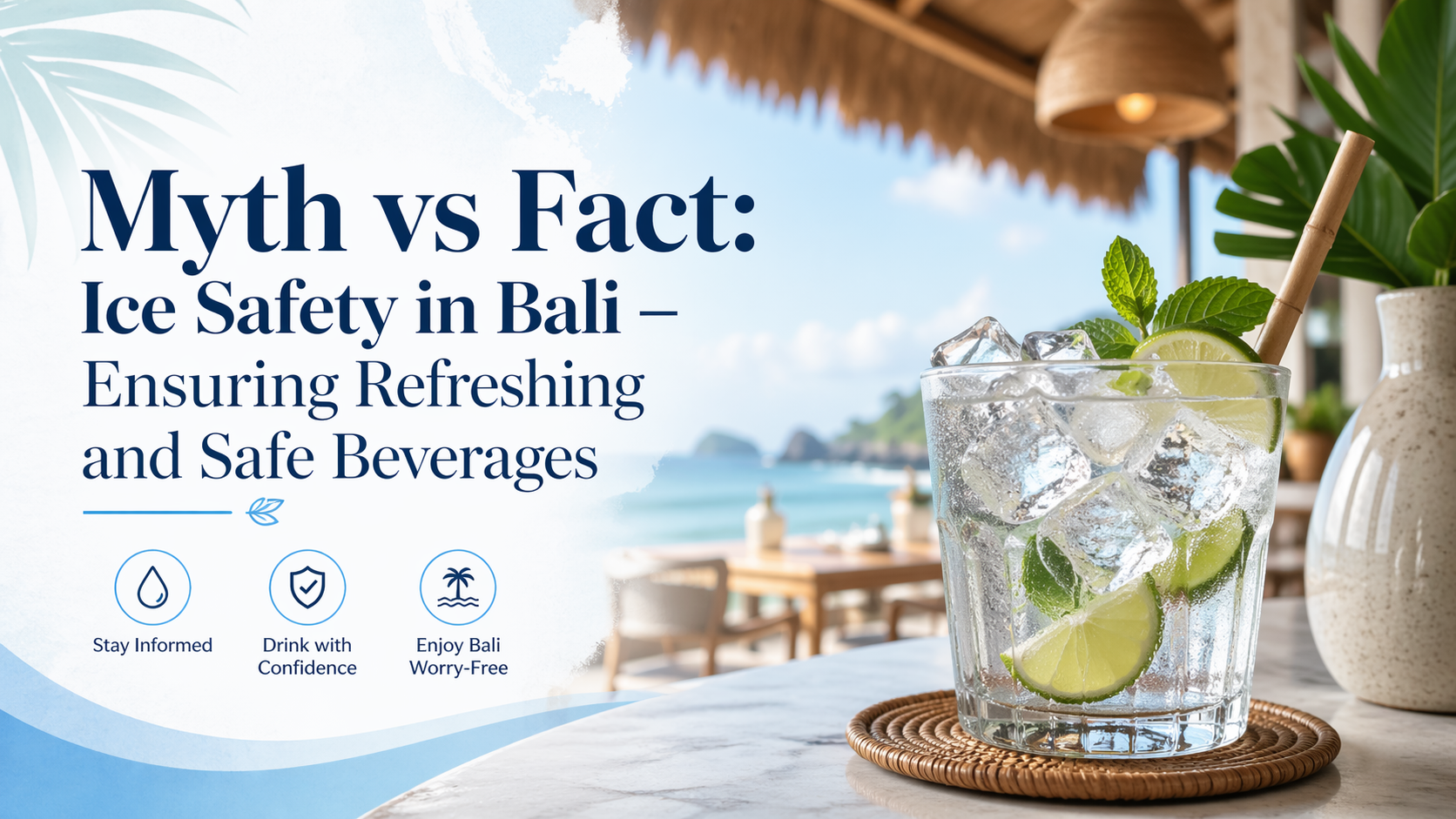
One common concern among travellers visiting Bali is the safety of consuming drinks with ice. It is one of those travel myths that gets repeated so often online that many visitors start to assume ice in Bali is unsafe by default. In reality, that is not how most people should think about it.
The better and more reassuring answer is this: in reputable restaurants, cafés, hotels, beach clubs, and tourist-focused venues in Bali, ice is generally safe. Indonesia has a national standard for edible ice, and food sanitation guidance requires ice used with ready-to-eat food and drinks to be made from water that meets drinking water standards. There is also a formal hygiene sanitation framework for restaurants and ready-to-eat food businesses.
So while travellers should always use common sense, there is no reason to treat every iced drink in Bali as a problem. The places where more caution makes sense are usually very rural or remote areas, tiny low-trust setups, or anywhere the source of the ice is unclear. For most visitors sticking to normal hospitality venues, ice safety in Bali is not something to stress over.
Myth: Ice in Bali is unsafe and should be avoided
Fact: In reputable Bali venues, ice is usually safe
This is the most important point in the whole discussion. The old blanket advice to “avoid all ice in Bali” is simply too broad. It may sound cautious, but it is not very accurate.
The real issue is not ice itself. The real issue is what water the ice was made from and how it was handled. Travel health guidance says travellers should avoid ice only when they are not reasonably certain it was made using safe water. That is a very different message from saying all ice should be avoided.
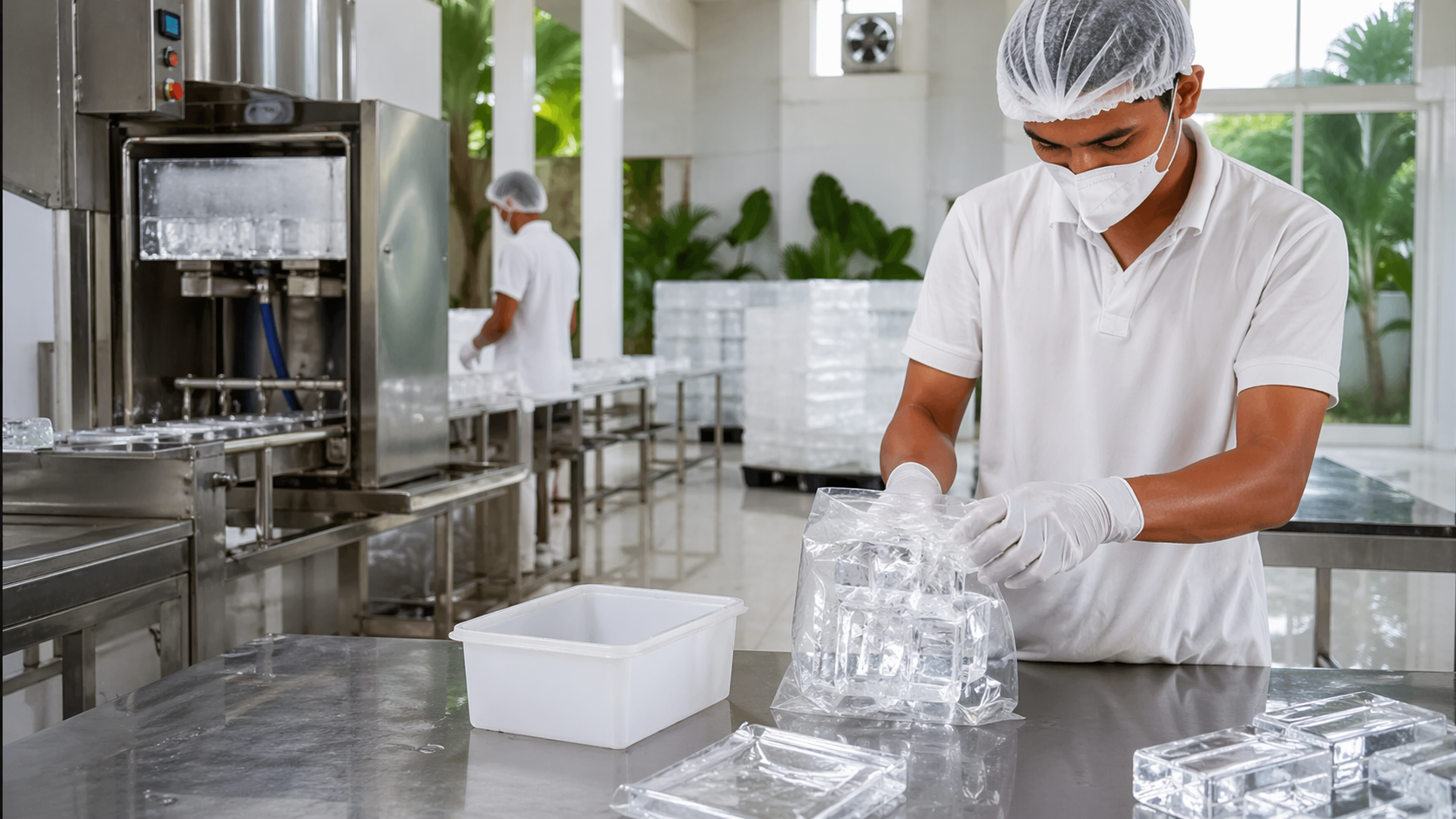
That distinction matters because Bali’s hospitality industry is full of reputable venues serving tourists, expats, and families every day. These businesses are not freezing random tap water into cubes and hoping for the best. In practice, proper venues generally use commercially produced edible ice or safe water systems designed for food and drink service. That is why millions of iced coffees, juices, cocktails, and soft drinks are consumed across Bali without issue every year.
Why most reputable restaurants in Bali do not use unsafe ice
For any established restaurant, guest safety is not optional. A venue that serves travellers and families depends on trust, reputation, reviews, and repeat business. Using poor-quality ice would be an incredibly stupid corner to cut.
This is why most reputable restaurants in Bali do not use unsafe ice. They are far more likely to use commercial edible ice from trusted suppliers or other proper food-safe ice sources. Indonesia’s food hygiene framework also reflects that expectation: ice that comes into direct contact with ready-to-eat food and beverages should be made from water that meets drinking water standards.
That is the key thing travellers should remember. In the parts of Bali where most visitors actually spend their time — Seminyak, Canggu, Kuta, Legian, Sanur, Nusa Dua, Uluwatu, Jimbaran, Berawa, Pererenan, and the main tourist hubs — mainstream venues are generally operating within a hospitality environment where safe ice is the norm, not the exception.
A simple visual clue: tube-shaped ice is usually a good sign
A practical rule of thumb many Bali travellers use is this: if the ice is tube-shaped with a hole through the middle, that is usually a good sign.
That style of ice is commonly associated with commercially produced edible ice, not homemade freezer-tray ice. It is not a magic guarantee, and it should not replace common sense, but it is often a reassuring sign that the venue is using a proper supplier rather than making basic ice from an unknown water source.
So if you are ever glancing at a drink and wondering whether the ice looks trustworthy, clear tube-shaped ice is generally the kind of ice people feel more comfortable with. It fits the broader pattern of commercial food-service ice rather than improvised homemade cubes.
IMAGE PROMPT:
Elegant editorial close-up of a fresh tropical drink in Bali with clear tube-shaped ice, polished glassware, bright daylight, premium restaurant setting, crisp realistic textures, upscale hospitality atmosphere, clean and reassuring travel-health aesthetic
Where extra caution makes sense
This is the part many articles get wrong. They either scare people too much or they pretend there is never any risk at all.
The more balanced answer is that extra caution usually only makes sense in lower-trust environments. That might include very remote or rural parts of Bali, tiny roadside setups with unclear hygiene standards, or anywhere the source of the water and ice is uncertain. Indonesia’s own Bali Belly guidance notes that contamination can happen through ice made from raw water, especially where water quality and hygiene are poor.
That does not mean travellers should start interrogating every waiter in Seminyak over an iced latte. It just means that if you are somewhere very basic, very remote, or clearly outside the type of venue where proper food handling is expected, that is where it becomes reasonable to be a little more selective.
In other words, the risk is not “Bali ice” as a whole. The risk is unknown source plus questionable hygiene.
Why people often blame the ice when it may not be the cause
Another reason the myth survives is that travellers often blame the last iced drink they had for whatever stomach issue came next. But the truth is that not every case of Bali Belly is caused by ice.
Traveller’s diarrhoea can come from many different sources: contaminated food, poor hand hygiene, undercooked meals, food left at the wrong temperature, raw produce washed in unsafe water, cross-contamination in kitchens, or unsafe water itself. Even the CDC notes that the classic “boil it, cook it, peel it, or forget it” rule is not foolproof, because real-world foodborne illness is often more complex than one obvious culprit.
So when somebody says, “I got sick from the ice,” they might be right — but they also might be blaming the most obvious thing in the glass rather than the meal, salad, fruit, sauce, buffet, or general food handling that actually caused the issue.
That is why smart travel advice should always focus on overall food and drink hygiene, not just ice alone.
IMAGE PROMPT:
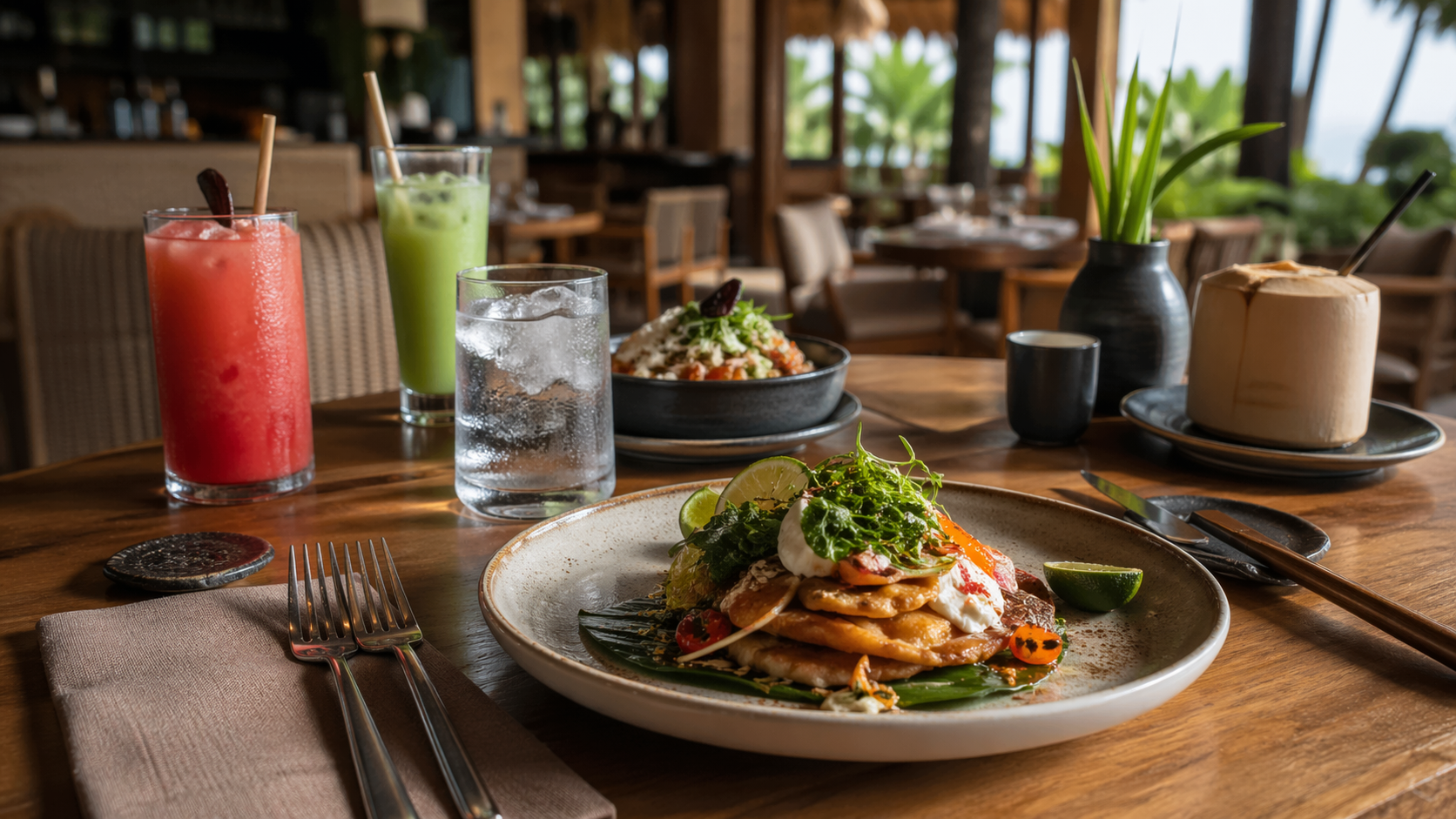
Photorealistic premium Bali restaurant table scene with fresh juices, iced water, plated food, clean modern hospitality styling, soft tropical daylight, upscale editorial travel-health photography, realistic and polished, no logos
Making your own ice in Bali
Some travellers feel more comfortable making their own ice in a villa, hotel room, or private accommodation. That is completely fine, and the safest way to do it is simple: use sealed bottled water or water from a trusted drinking-water dispenser.
That approach lines up with travel health guidance, which says that when water safety is uncertain, safe water should be used not only for drinking but also for making ice.
So if you are making your own ice in Bali, keep it simple:
Use sealed bottled water or trusted dispenser water
Make sure your ice trays or containers are clean
Do not use untreated tap water directly
Keep your freezer area hygienic
Treat homemade ice as part of your broader food and water hygiene routine
For most travellers staying in mainstream hotels or eating at established restaurants, this is more of an optional extra than a necessity. But it is an easy precaution for anyone who likes total control over what goes into their drinks.
So, can you drink beverages with ice in Bali?
Yes — in most normal traveller situations, absolutely.
For the average visitor eating and drinking at reputable places, ice safety in Bali is generally not a major concern. Bali’s tourism and hospitality scene depends on delivering a safe, enjoyable experience to huge numbers of international visitors. The idea that every cube of ice on the island is somehow dangerous just does not match reality.
A far more accurate message is this:
Choose reputable venues. Trust busy, established restaurants and cafés. Be a little more selective in very rural or low-trust settings. And if you notice clear tube-shaped ice, that is usually a reassuring sign that the ice is commercially produced.
That is the sensible middle ground. It is calm, practical, and much closer to how people should actually approach drinks in Bali.
Quick takeaways for travellers
To keep it simple, here is the easiest way to think about it:
Reputable Bali restaurants, cafés, hotels, and beach clubs generally use safe ice
Tube-shaped ice is usually a good sign of commercial edible ice
Extra caution is more relevant in rural or remote settings where the source is unclear
Not every stomach bug in Bali is caused by ice
If making your own ice, use bottled or trusted dispenser water
That is really all most travellers need to know.
Bali Belly Doctor’s view on ice safety in Bali
At Bali Belly Doctor, we do not think travellers need to be frightened of every iced drink they see. That kind of messaging is not especially helpful, and it does not reflect how most reputable venues in Bali actually operate.
Our view is simple: ice in Bali is usually fine in proper establishments. The focus should be on choosing clean, reputable venues and using a bit more caution in remote or lower-trust environments. That is a much more realistic and traveller-friendly approach than telling people to avoid all ice completely.
So enjoy your iced coffee, your fresh juice, your smoothie, your soft drink, or your cocktail without overthinking it. Bali is hot, hydration matters, and chilled drinks are part of the experience.

Final verdict
The myth is that ice in Bali is unsafe and should always be avoided.
The fact is that in reputable venues, ice is generally safe, and the only times travellers really need to think harder about it are when they are in very remote areas or somewhere the source is unclear. Indonesia has standards and food sanitation rules around edible ice and safe water use, and mainstream travel health advice says the same basic thing: the key issue is whether the ice was made from safe water.
So next time you are in Bali, there is no need to panic when a cold drink arrives at the table. Choose good venues, trust the places that take hospitality seriously, and use common sense in the rare situations where the setting feels uncertain.
For any concerns about Bali Belly, dehydration, food and drink safety, or traveller health in Bali, Bali Belly Doctoris here to help.