
What To Do If You’re Bitten by a Monkey in Bali
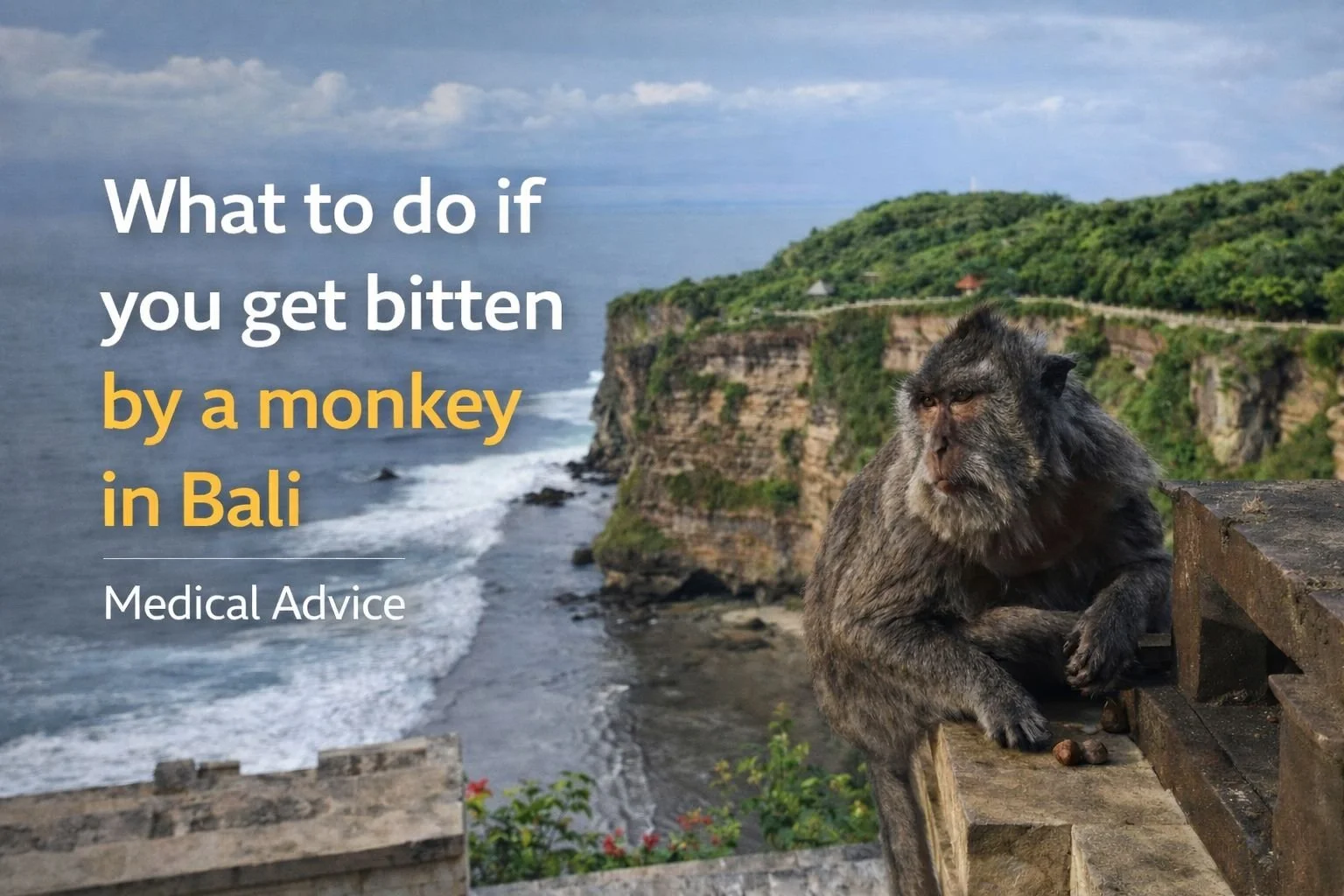
Monkey encounters are a common part of visiting Bali—especially around popular areas like Ubud’s Monkey Forest, temples, and forested tourist spots. While most interactions are harmless (if you keep your distance), monkey bites and scratches do happen—and they should always be taken seriously.
Even small bites can carry health risks in tropical environments. If you or someone you’re traveling with is bitten or scratched by a monkey in Bali, here’s what you should do immediately.
Why Monkey Bites Are a Medical Concern
Monkeys can carry bacteria and viruses that may be transmitted through bites or scratches. In Bali and across Southeast Asia, one of the main concerns after monkey bites is rabies exposure, along with wound infections due to bacteria entering broken skin.
Even if the wound looks small or doesn’t hurt much, it can still pose a health risk. Prompt action significantly reduces the chance of complications.
Immediate First Aid: What To Do Right Away
If you are bitten or scratched by a monkey:
1. Wash the wound immediately (very important)
Rinse the wound thoroughly under running water for at least 10–15 minutes. Use soap if available. This step alone greatly reduces the risk of infection and viral transmission.
2. Disinfect the wound
After washing, apply an antiseptic solution if you have one. This helps reduce bacterial contamination.
3. Do not cover tightly
Lightly cover the wound with a clean dressing, but avoid sealing it tightly unless advised by a medical professional. The wound should stay clean and dry.
4. Avoid home remedies
Do not apply substances like oils, toothpaste, alcohol-based drinks, or herbal pastes to the wound. These can worsen irritation or introduce bacteria.
Seek Medical Advice as Soon as Possible
After any monkey bite or scratch in Bali, it’s strongly recommended to seek medical evaluation promptly—even if the wound seems minor.
A healthcare professional can:
Properly clean and assess the wound
Determine whether post-exposure rabies treatment is required
Provide guidance on wound care and infection prevention
Assess the need for tetanus protection, depending on your vaccination history
Early assessment is key. Rabies prevention treatment is most effective when started as soon as possible after exposure.
Signs You Should Not Ignore
Seek medical attention urgently if you notice:
Increasing redness or swelling
Pain that worsens over time
Pus or fluid from the wound
Fever
Red streaks spreading from the wound
Numbness around the bite area
These may indicate infection and should be addressed quickly.
How to Avoid Monkey Bites in Bali
Prevention is always better than treatment. When visiting areas where monkeys are common:
Do not feed monkeys
Avoid direct eye contact
Keep food and shiny objects out of sight
Secure bags, phones, and sunglasses
Don’t try to touch or pose with monkeys
Follow local guides’ instructions
Monkeys can become aggressive if they feel threatened or if they associate humans with food.
Common Myths About Monkey Bites
“It was just a small scratch, so it’s fine.”
Even small scratches can break the skin and introduce bacteria or viruses.
“The monkey looked healthy.”
It’s impossible to tell whether an animal carries disease just by appearance.
“I washed it later that night.”
Immediate washing is far more effective than delayed cleaning.
Final Thoughts
Monkey encounters can be a memorable part of visiting Bali—but bites and scratches should always be treated as a medical concern. Quick action, proper wound cleaning, and timely medical advice can significantly reduce health risks and give you peace of mind while traveling.
If you’re ever unsure whether a bite or scratch needs attention, it’s better to have it checked early rather than waiting for symptoms to appear.