
Food Poisoning in Bali: Common Causes, Symptoms & How Travellers Can Reduce Their Risk (2026)
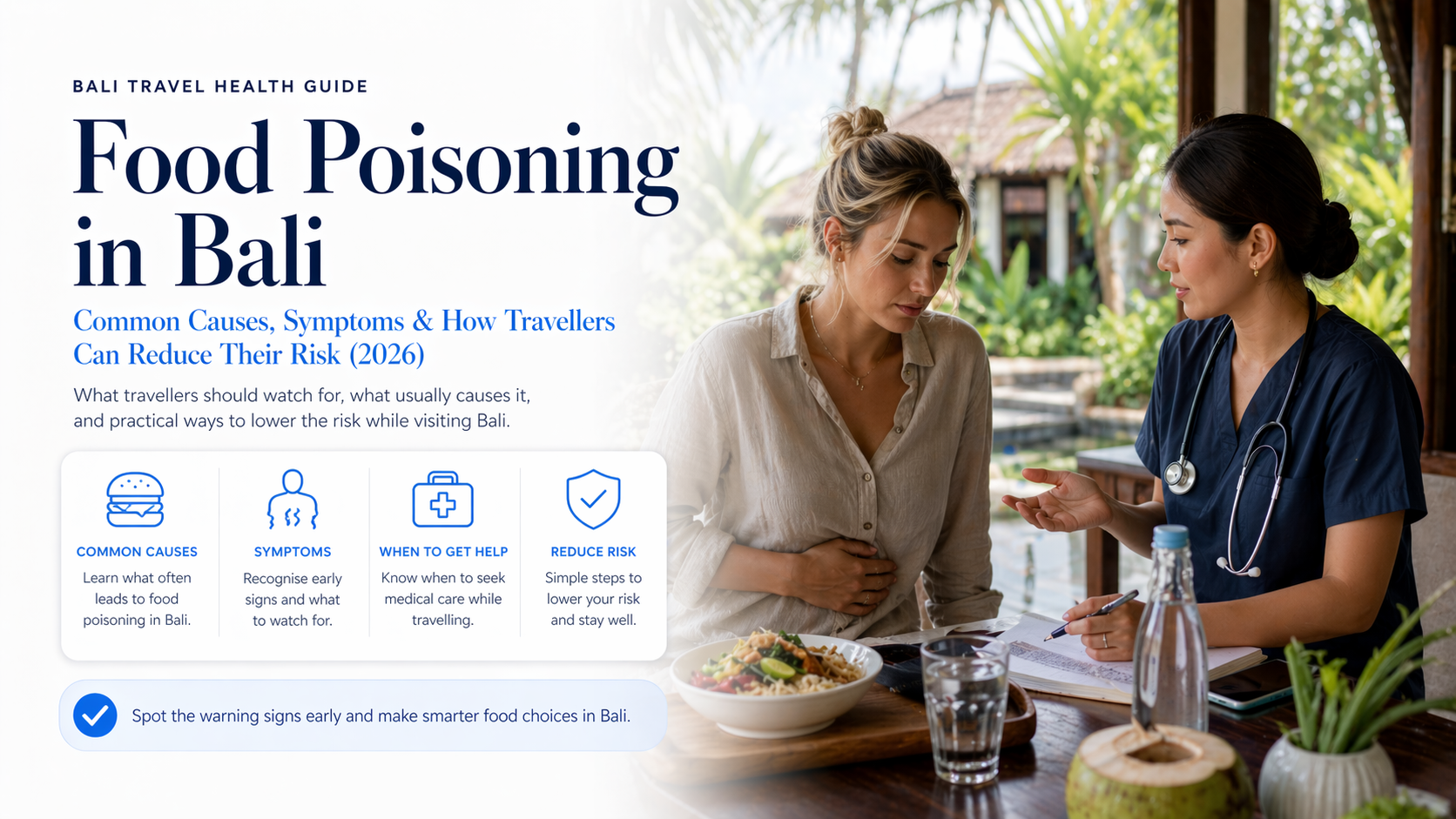
Food poisoning can happen anywhere in the world — including in popular travel destinations like Bali. Different bacteria and viruses cause food-borne illness, and contamination can occur in restaurants, private homes, street food stalls, and even packaged foods.
If you’ve ever had food poisoning while travelling, you’ll know that even one case is enough to derail a holiday. This guide explains the most common causes of food poisoning travellers encounter, how to recognise symptoms, and practical steps you can take to reduce your risk while in Bali.
If you’re currently unwell with vomiting or diarrhoea while travelling, our Bali Belly Doctor guide to what to do when you get sick in Bali explains when to seek medical care and how to manage symptoms safely.
Norovirus (Stomach Flu)
What it is:
Norovirus is one of the most common causes of food poisoning worldwide and a frequent cause of outbreaks in hotels, cruise ships, and shared dining environments. It causes inflammation of the stomach and intestines (gastroenteritis).
Common symptoms:
Nausea, vomiting, watery diarrhoea, stomach cramps, and sometimes fever or body aches.
How travellers catch it:
Norovirus spreads very easily from person to person, through contaminated food or drinks, shared utensils, and contact with contaminated surfaces. It is highly contagious and can survive on surfaces for long periods. Travellers are at higher risk in shared environments such as buffets, group tours, and communal kitchens.
According to the US Centers for Disease Control and Prevention (CDC), norovirus is one of the leading causes of acute gastroenteritis worldwide and is extremely difficult to avoid completely.
Common sources:
Raw or undercooked shellfish (especially oysters), unwashed fruits and vegetables, and foods handled by infected individuals.
Listeria
What it is:
Listeria is a type of bacteria found in soil, water, and some animals. It can contaminate food during processing and storage.
Common symptoms:
Fever, headache, stiff neck, confusion, weakness, vomiting, and sometimes diarrhoea. In vulnerable people (pregnant women, older adults, and those with weakened immune systems), listeria can cause severe complications.
How travellers catch it:
Listeria is usually contracted through contaminated foods and can grow even in cold temperatures, such as inside refrigerators.
Common sources:
Unpasteurised milk and dairy products, soft cheeses, deli meats, pâté, and ready-to-eat foods that have been stored for long periods.
Travellers with weaker immune systems should be especially cautious with raw dairy products and chilled ready-to-eat foods.
E. coli (Escherichia coli)
What it is:
E. coli bacteria normally live in the intestines of humans and animals, but certain strains can cause serious illness.
Common symptoms:
Diarrhoea (sometimes bloody), stomach cramps, nausea, and vomiting. Some strains can lead to severe complications such as kidney failure, particularly in children.
How travellers catch it:
E. coli spreads through contaminated food or water, poor hand hygiene, and cross-contamination during food preparation.
Common sources:
Undercooked ground beef, unpasteurised milk and juices, contaminated raw vegetables, and unsafe drinking water.
Travellers in Bali should avoid drinking tap water and ensure food is cooked thoroughly.
Salmonella
What it is:
Salmonella is one of the most common causes of bacterial food poisoning worldwide and a frequent cause of gastroenteritis in travellers.
Common symptoms:
Fever, diarrhoea, stomach cramps, nausea, and vomiting, typically developing within 12 to 72 hours after exposure.
How travellers catch it:
By consuming contaminated food or drinks, or through contact with contaminated surfaces and poor food handling practices.
Common sources:
Raw or undercooked eggs, poultry, meat, unpasteurised milk, and foods contaminated during preparation.
Most people recover within several days, but dehydration can be serious, especially in children and older adults. If diarrhoea and vomiting persist, medical assessment may be needed. Our Bali Belly Doctor treatment guide explains safe options for managing dehydration and when to seek professional care.
For general food safety and foodborne illness guidance, the World Health Organization (WHO) provides a useful overview of food safety risks and prevention.
How Travellers Can Reduce Their Risk of Food Poisoning in Bali
Food poisoning can’t be completely avoided, but travellers can significantly reduce their risk by following basic food safety principles:
Wash hands regularly
Wash hands with soap and water before eating and after using the bathroom. Carry hand sanitiser for situations where soap and water are not available.
Choose busy food outlets
Busy restaurants and food stalls usually have higher food turnover, meaning food is fresher and less likely to be sitting at unsafe temperatures.
Avoid high-risk foods
Be cautious with raw seafood, undercooked meat, unpasteurised dairy products, and foods that have been sitting out for long periods.
Drink safe water only
Use bottled or properly filtered water for drinking and brushing teeth. Avoid ice unless you’re confident it’s made from safe water.
Wash and peel produce
Rinse fruits and vegetables with safe water and peel where possible to reduce surface contamination.
Separate raw and cooked foods
Avoid cross-contamination when preparing food in villas or kitchens.
Eat freshly cooked food
Hot food should be served hot. Avoid foods that have been left at room temperature for extended periods.
What To Do If You Get Food Poisoning in Bali
Most mild cases of food poisoning improve with rest and hydration. However, travellers should seek medical advice if they experience:
Persistent vomiting
Severe or bloody diarrhoea
High fever
Signs of dehydration (dry mouth, low urine output, dizziness)
Symptoms lasting more than 24–48 hours
Final Advice for Travellers
Food poisoning is a common travel health issue, but simple precautions can greatly reduce your risk. Being mindful of what and where you eat, practicing good hygiene, and recognising symptoms early can help prevent a minor illness from becoming a major disruption to your Bali holiday.
Staying informed is one of the easiest ways to protect your health while travelling.