
Bali Belly While Pregnant: What’s Safe, What to Avoid, and When to Get Checked
If you get Bali Belly while pregnant, the most important thing is not to panic, but not to brush it off either.
Many mild stomach bugs settle with rest, hydration, and careful monitoring. But pregnancy changes the equation. Dehydration can hit harder, fever matters more, and not every case of vomiting or diarrhoea is “just Bali Belly.” Some symptoms can overlap with more serious foodborne infections or severe pregnancy-related vomiting, which is why pregnant travellers should take gastro symptoms more seriously than the average tourist.
The short version is this: if you are pregnant in Bali and develop diarrhoea, vomiting, stomach cramps, nausea, or fever, hydration comes first, risky self-medication should be avoided, and the threshold for getting checked should be lower than usual. CDC guidance for pregnant travellers specifically says the treatment of choice for traveller’s diarrhoea is prompt and vigorous oral hydration, and that pregnant travellers may need medical review sooner when red-flag symptoms appear.
Quick answer: what should you do first?
If you think you have Bali Belly while pregnant:
start drinking fluids early
use oral rehydration solution if possible
avoid Pepto-Bismol / bismuth subsalicylate
do not casually self-treat with Imodium
get checked the same day if you have fever, blood in the stool, ongoing vomiting, severe pain, dehydration, contractions, bleeding, leaking fluid, or reduced baby movement
That is the safest practical framework.
What “Bali Belly” actually means in pregnancy
“Bali Belly” is not a medical diagnosis. It is a travel nickname people use for diarrhoea, vomiting, stomach cramps, nausea, food poisoning, or traveller’s diarrhoea after eating or drinking something contaminated.
In pregnancy, that label can be misleading. Sometimes it really is simple gastroenteritis. Sometimes it is bacterial traveller’s diarrhoea. Sometimes it is severe vomiting related to pregnancy itself. And in some cases, especially if fever is involved, doctors also have to think about foodborne infections that are more important in pregnancy, including listeria.
That is why the right question is not just, “What can I take?” The better question is, “Is this definitely straightforward gastro, or do I need a proper assessment?”
Why Bali Belly can be more serious when you’re pregnant
Pregnancy already makes many women more vulnerable to nausea, reduced appetite, reflux, and fluid imbalance. Add vomiting or diarrhoea, and it becomes easier to tip into dehydration. Even a short illness can leave you weak, dizzy, dry-mouthed, and unable to tolerate food or fluids properly.
The biggest risk in many cases is not the diarrhoea itself. It is the fluid loss that comes with it. WHO guidance on diarrhoeal illness continues to emphasise that oral rehydration solution is the key treatment for dehydration from diarrhoea because it replaces both water and electrolytes.
Pregnancy also lowers the margin for error when other symptoms are involved. Fever, severe vomiting, contractions, vaginal bleeding, leaking fluid, or reduced baby movement are not symptoms to “sleep off” and reassess tomorrow. CDC guidance for pregnant travellers lists these as reasons to seek urgent medical attention.
First priority: hydration, not random medication
If you can still drink, hydration is the first-line treatment.
That means:
small frequent sips rather than large drinks all at once
bottled water from a trusted source
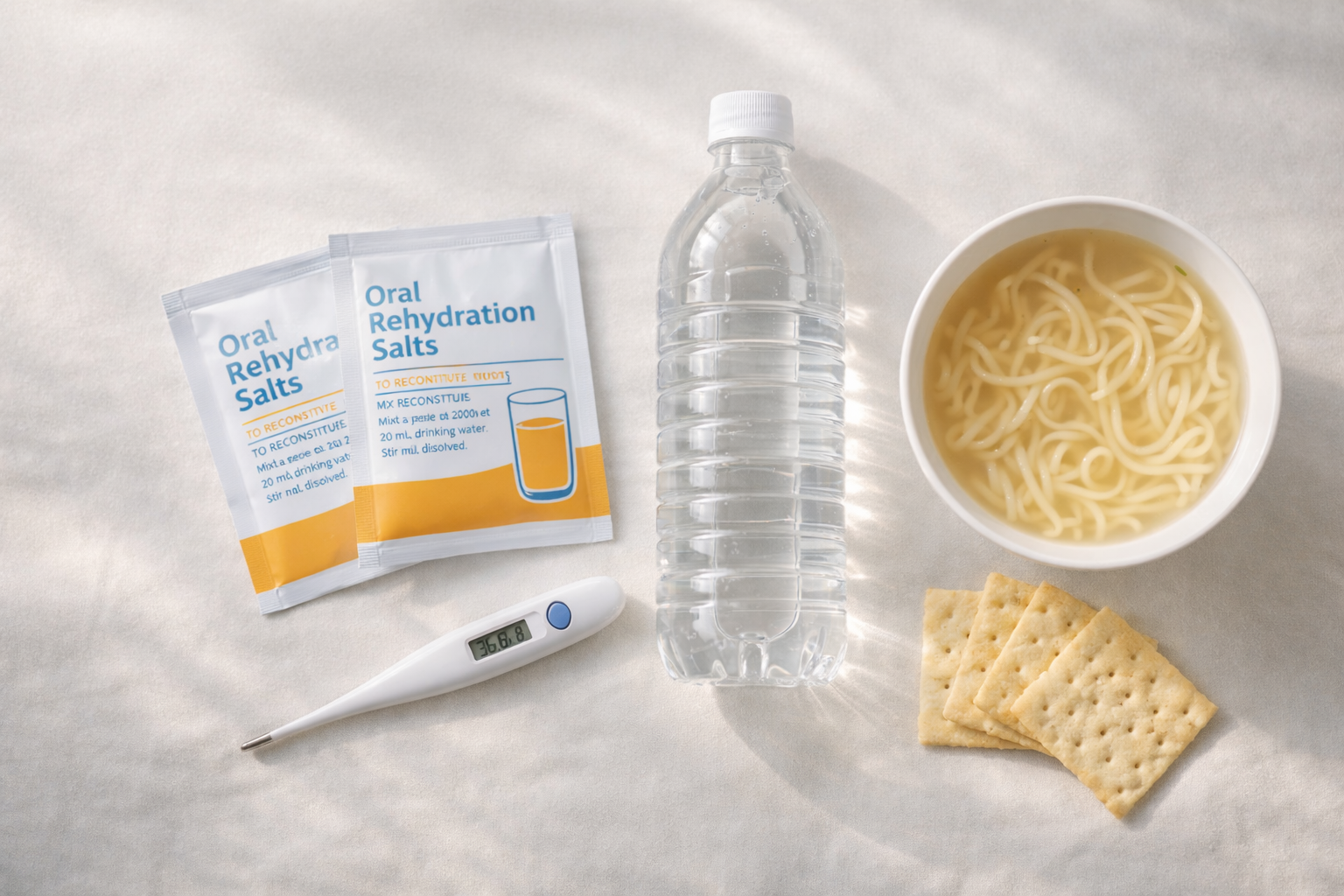
oral rehydration solution if you can get it
bland fluids like broth if tolerated
Oral rehydration solution is usually better than plain water alone when you have diarrhoea or vomiting because it helps replace salts as well as fluid. WHO states that diarrhoea should be treated with ORS, and CDC’s pregnancy travel guidance specifically calls prompt oral hydration the treatment of choice for pregnant travellers with traveller’s diarrhoea.
If you are vomiting, tiny sips every few minutes are often easier than trying to drink a whole bottle quickly. If you cannot keep fluids down, that is one of the clearest signs you should be assessed rather than continuing to self-manage.
What to eat if you’re pregnant and have Bali Belly
Once vomiting starts to ease, stick with simple, bland foods that sound manageable rather than trying to force a normal meal.
Good starting foods often include:
plain rice
toast
bananas
crackers
soup
plain noodles
other low-fat, easy-to-digest foods
The goal is not to eat a “perfect recovery diet.” The goal is to gently restart intake without making nausea or cramps worse. General NHS guidance on diarrhoea and vomiting supports simple foods and fluids while symptoms are settling.
What to avoid taking while pregnant
This is where a lot of online travel content falls apart. Pregnancy is not the time to throw every pharmacy remedy at the problem.
Avoid Pepto-Bismol and bismuth subsalicylate
CDC’s Yellow Book guidance for pregnant travellers says to avoid bismuth subsalicylate because of the potential impact of salicylates on the fetus.
That means if someone offers you Pepto-Bismol as a quick fix, it is not the right default choice in pregnancy.
Be very cautious with Imodium
Imodium, or loperamide, is commonly used by travellers, but pregnancy changes the conversation. NHS guidance says loperamide is not usually recommended when pregnant because there is not enough information to say it is safe.
That does not mean it is never considered by a clinician in any situation. It means pregnant travellers should not treat it like a standard first-line self-medication option.
Do not self-start random antibiotics
Not every case of Bali Belly needs antibiotics. Many mild cases improve with hydration and supportive care. But some cases, especially those involving fever, significant diarrhoea, or a bacterial cause, may need a pregnancy-appropriate antibiotic chosen by a doctor. CDC states that azithromycin or a third-generation cephalosporin may be used in pregnant travellers if clinically indicated.
The key point is that antibiotics in pregnancy should be chosen properly, not bought casually because a pharmacy shelf happened to have them.
Foods and drinks to avoid while pregnant in Bali
Pregnancy-safe food choices are not just about reducing the chance of Bali Belly. They are also about lowering exposure to infections that can matter more during pregnancy.
ACOG advises pregnant women to avoid raw milk and foods made from raw milk, certain soft cheeses made from unpasteurized milk, and other higher-risk foods associated with listeria.
In practical Bali terms, that means being extra careful with:
lukewarm buffet food
food that has clearly been sitting out
raw seafood
undercooked meat
uncertain dairy products
drinks with ice from an untrusted water source
salads or cut fruit from places you do not trust
deli meats or processed meats that have not been reheated properly
No one can eliminate all risk while travelling. But pregnancy is the time to be more selective, not more adventurous.
When you should get checked the same day
If you are pregnant in Bali and have diarrhoea or vomiting, it is worth getting checked the same day if you have any of the following:
fever
blood in the stool
ongoing vomiting
severe cramps or abdominal pain
dizziness or faintness
dark urine or not peeing much
symptoms that are not improving
reduced baby movement later in pregnancy
vaginal bleeding
leaking fluid
contractions
These are not “watch and wait” symptoms in pregnancy.
When it is urgent
Seek urgent medical care if:
you cannot keep fluids down at all
you feel faint, confused, or extremely weak
you are barely urinating
you have a high fever
you have severe abdominal pain
you notice reduced or absent baby movement
you have bleeding, contractions, or leaking fluid
CDC’s pregnancy travel guidance specifically lists reduced baby activity, fever of 38°C or higher, dizziness or fainting, severe belly pain, severe nausea and vomiting, vaginal bleeding, and fluid leaking from the vagina as reasons to get urgent medical attention.
The part most articles miss
Most articles about Bali Belly in pregnancy focus too much on one question: what medicine can I take?
That is only half the issue.
The bigger issue is whether the symptoms actually fit ordinary traveller’s diarrhoea at all. NHS guidance on severe vomiting in pregnancy makes clear that some pregnant women develop intense vomiting that can lead to dehydration and hospital treatment. In other words, not every pregnant traveller who is vomiting has food poisoning.
Likewise, fever plus diarrhoea or vomiting can raise concern for foodborne illness that deserves more caution in pregnancy. ACOG advises pregnant women to be especially careful about listeria-related food exposures because listeriosis can cause serious complications.
That is why advice on this topic is not just “take this, avoid that.” It is about recognising when the story does not fit simple Bali Belly.

A practical rule pregnant travellers can actually use
If your symptoms are:
mild
clearly improving
not associated with fever
not associated with blood
not associated with dehydration
and you are still drinking and urinating normally
then supportive care may be enough while you monitor yourself closely.
If your symptoms are:
getting worse
lasting longer than they should
associated with fever
associated with blood
associated with persistent vomiting
associated with reduced intake
associated with reduced baby movement
or simply making you feel significantly unwell
then stop treating it like ordinary travel tummy trouble and get checked.
That is the safest way to think about it.
Final word
Bali Belly while pregnant is not automatically dangerous, but it is also not something to manage casually.
The safest approach is simple:
hydrate early
use ORS if possible
avoid Pepto-Bismol
be cautious with Imodium
do not self-prescribe antibiotics
get checked early if symptoms are not clearly mild and improving
Pregnancy is one of those situations where being “a bit too cautious” is usually better than being too relaxed.
If you are pregnant in Bali and dealing with diarrhoea, vomiting, cramps, dehydration, or fever, early medical assessment is often the smartest move.

Frequently Asked Questions
Is Bali Belly dangerous during pregnancy?
Not always. Many mild cases improve with hydration and rest. But pregnancy makes dehydration, fever, foodborne infection, and severe vomiting more important, so the threshold for getting checked should be lower.
What is the safest first step if I get Bali Belly while pregnant?
Start hydration early. Oral rehydration solution is usually the best first option when diarrhoea or vomiting is causing fluid loss.
Can I take Imodium while pregnant?
It is not usually recommended without medical advice. NHS says there is not enough information to say it is safe in pregnancy.
Can I take Pepto-Bismol while pregnant?
No. CDC advises pregnant travellers to avoid bismuth subsalicylate because of the potential impact of salicylates on the fetus.
When should I get checked?
The same day if you have fever, blood in the stool, persistent vomiting, dehydration, severe pain, bleeding, contractions, leaking fluid, or reduced baby movement.
Can Bali Belly just be morning sickness or hyperemesis?
Sometimes vomiting in pregnancy is not due to infection at all. NHS guidance notes that severe pregnancy-related vomiting can become serious and may need treatment or hospital care.