
Bali Belly in Rainy Season: Why Cases Often Rise (How to Avoid It)
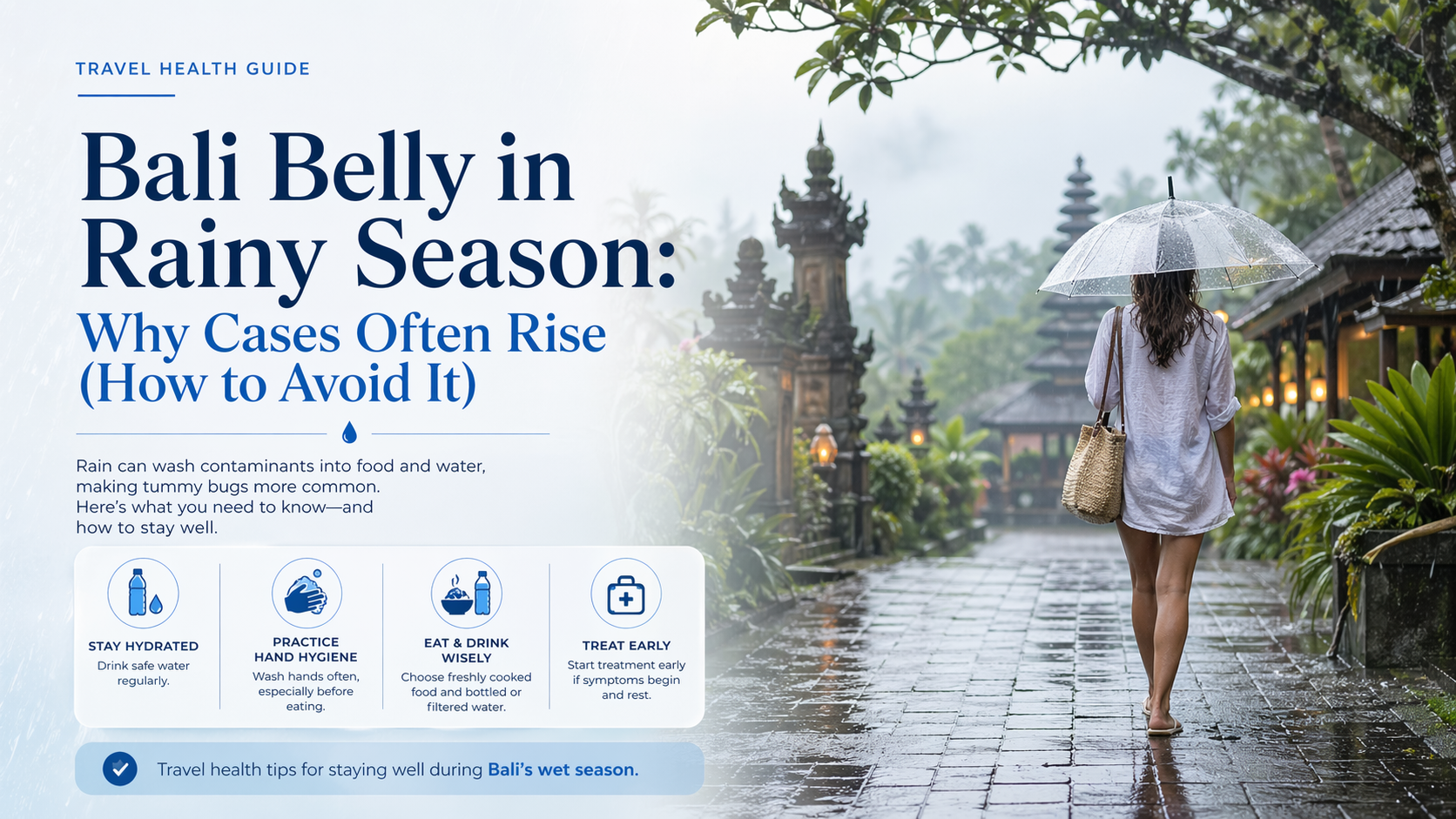
If you’ve spent any time in Bali during the rainy months, you’ve probably heard the same story: “Everyone’s getting Bali Belly right now.”
“Bali Belly” is a casual term, but most people mean traveler’s diarrhea / gastroenteritis—commonly caused by germs that enter the body through contaminated food, water, hands, or surfaces.
And yes—wet weather can increase the risk.
Below is what rainy season changes, why it matters, and the most practical steps you can take to avoid getting sick.
Why rainy season can mean more Bali Belly
1) Rain can contaminate water sources (even indirectly)
Heavy rain and flooding can increase runoff and overwhelm drainage systems. That can raise the chance of contamination reaching places it shouldn’t—especially when it affects food prep areas, rinsed produce, dishwashing, or water storage.
Even if you never drink tap water, water exposure can still happen through everyday routines.
2) Humidity + warmth makes food spoil faster
Rainy season often brings warm temperatures and high humidity, which can help bacteria multiply faster—especially when food is:
left at room temperature too long
reheated inconsistently
stored improperly
handled repeatedly
It’s not always “street food vs restaurant.” Risk is mostly about time, temperature, and hygiene.
3) Busy periods can strain kitchens and hygiene
When venues are packed, kitchens can be pushed hard—more volume, faster prep, more handling. That can increase the chance of cross-contamination if standards slip.
4) Viruses spread more easily in shared spaces
Some “Bali Belly” is viral gastroenteritis, which can spread through contaminated hands and surfaces—especially in villas, hotels, shared bathrooms, tours, coworking spaces, and group activities.
How to avoid Bali Belly in rainy season (the practical checklist)
A) Water & drinks: the “no regrets” rules
Do:
Drink sealed bottled water or properly filtered water from reputable systems.
Use bottled/filtered water for brushing teeth if you’re being extra cautious.
Choose drinks prepared in clean environments and served fresh.
Be cautious with:
Drinks from unknown dispensers or refill stations
Fresh juices/smoothies from places with questionable hygiene
Anything prepared with water you can’t verify
B) Food: what matters most (and what doesn’t)
Lower-risk choices:
Food that is cooked hot and served hot
Fruit you peel yourself (banana, orange, mango)
Busy venues with high turnover (fresh cooking cycles)
Higher-risk choices (especially in wet season):
Raw salads / uncooked garnishes that may be rinsed in unsafe water
Buffets where food sits out for long periods
Lukewarm foods and sauces sitting at room temp
Undercooked seafood, raw eggs, and questionable mayo-based dishes
C) Hand hygiene: the biggest lever (and most overlooked)
This is the habit that makes the biggest difference.
Wash hands with soap and water before eating and after the bathroom.
If soap/water aren’t available, use alcohol-based sanitizer, then wash properly when you can.
Avoid touching your mouth/face while out and about.
Pro tip: Carry sanitizer and use it before every meal—not just when your hands look dirty.
D) Accommodation habits that reduce risk
In rainy season, small choices help:
Use bottled water for your room kettle if you’re cautious
Don’t leave cooked food sitting in your room for hours
Be extra careful with communal snacks or shared food setups
E) Don’t “train your stomach” with risky food
A common myth is: “Eat everything and your stomach adapts.”
Sometimes people get lucky — but exposure is exposure. Smart precautions reduce your risk.
What to do if symptoms start
Step 1: Hydrate early
Most complications come from dehydration.
Sip fluids regularly
Use oral rehydration salts (ORS) if diarrhea is frequent or watery
Avoid alcohol until you’re clearly improving
Step 2: Know when to see a doctor
Seek medical help urgently if you have:
Dehydration signs (dizziness, fainting, very dark urine, confusion)
Blood in stool
High fever
Severe abdominal pain
Persistent vomiting (can’t keep fluids down)
Symptoms lasting more than 48–72 hours or worsening
Step 3: Don’t self-medicate blindly
Not every case is bacterial, and treatment depends on the cause. If symptoms are severe, persistent, or include red flags, it’s safer to speak to a clinician.
Rainy season Bali Belly: the bottom line
Rainy season can raise risk because water contamination and food handling problems become more likely in warm, wet conditions. The best prevention is simple:
Clean hands. Safe drinks. Hot food. High-turnover venues. ORS on standby.